


Review · Sleep · 1 model
Philips SmartSleep HF3519 review: 300 lux, two alarms and FM radio, and the dawn without the red
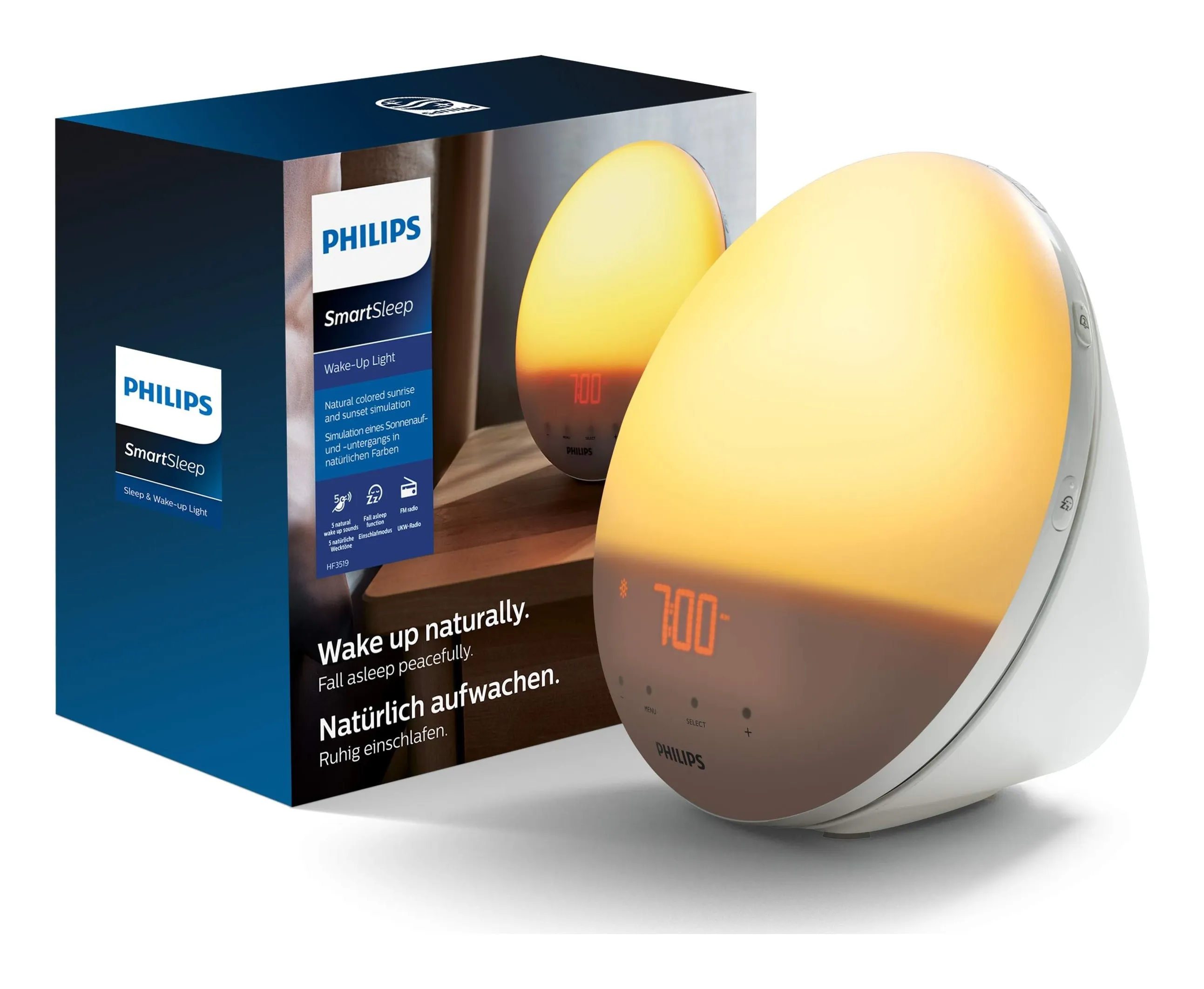
Philips' mid-range wake-up light: a sunrise of 20 to 40 minutes rising from yellow to white, up to 300 lux in 20 steps, five wake-up sounds, FM radio, two alarms and a sunset to fall asleep to, in a 20 cm lamp. This review is about what a stated brightness tells you, why two alarms suit a couple, what the missing red phase means, and how much bedside the lamp needs.
Verdict
What it is
the wake-up light reviewed
Philips SmartSleep Wake-up Light HF3519/01
- Sunrise length
- 20–40 min
- Brightness
- 300 lux
- Wake sounds
- 5
- Radio
- FM
- Alarms
- 2
- Light
- Yellow to white sunrise (no red dawn)
Check price
A wake-up light with a sunrise of 20 to 40 minutes, 30 by default, rising from yellow to white to a peak of 300 lux, set in 20 brightness steps. It has five natural wake-up sounds, FM radio, two alarms, snooze and a sunset simulation. 19.9 centimetres across, 19.2 tall and 14.6 deep, 16.5 W from the mains, 1.04 kg by the listing, with a two-year guarantee. From Philips UK.
Strengths
- Brightness stated: 300 lux across 20 steps
- Two alarms, so a couple can wake at different times
- FM radio and five sounds
Limitations
- Sunrise only from 20 to 40 minutes
- Sunrise goes yellow to white, no red dawn phase on this model
- Heavier and larger than the Lumie domes
Good for
- a couple with different alarm times
- someone who wants a bright reading lamp as well
Look elsewhere if
- a narrow bedside shelf
The brightness
Philips publishes the peak: 300 lux, across 20 steps. Lumie does not give a lux figure for its Bodyclocks, so against a Lumie this is the lamp whose brightness you can compare on paper. With 20 steps it also works as a bedside reading lamp in the evening.
The dawn
Twenty to 40 minutes, 30 by default, rising from yellow to white. Lumie’s sunrise lamps and Philips’ own HF3531 begin with red and orange, which mimics the first part of a real dawn; the HF3519 skips it. The light still builds gradually, and for many people that is what wakes them. If the colour of the first minutes matters to you, look at the HF3531 or a Lumie.
Two alarms
The HF3519 stores two alarm times. A couple who get up at different times can each have their own, which Lumie’s Rise 100 and Glow 150 do not offer. Both alarms use the same lamp, so the first one lights the room; it suits times that are close together rather than hours apart.
Sound and radio
Five natural wake-up sounds, or FM radio. For anyone who has woken to the radio for years, this replaces the clock radio entirely. The Lumie Glow 150 has more sounds but no radio; the Shine 300 has both.
The sunset
At night the lamp dims over a set time, so you can read and let it fade. Philips states it as a feature; it does not give the range for the sunset separately.
Size
Nearly 20 centimetres across and 1.04 kg by the listing: larger and heavier than the Lumie domes at 16 centimetres and 565 grams. Measure the bedside table.
Strengths
- Brightness stated: 300 lux across 20 steps
- Two alarms, so a couple can wake at different times
- FM radio and five sounds
Limitations
- Sunrise only from 20 to 40 minutes
- Sunrise goes yellow to white, no red dawn phase on this model
- Heavier and larger than the Lumie domes
Good for
- a couple with different alarm times
- someone who wants a bright reading lamp as well
Look elsewhere if
- a narrow bedside shelf
Who should buy it
A couple with different alarm times; someone who wants a bright lamp for reading as well as waking; anyone replacing a clock radio who wants the radio kept.
Who should not
Someone with a narrow bedside shelf; anyone who wants a red-to-white dawn or a sunrise longer than 40 minutes, who should look at Lumie’s Shine 300.
Sources
Facts checked 16 November 2026
- Philips UK — SmartSleep Wake-up Light HF3519/01 product page and specifications — Manufacturer documentation, checked 23 October 2026
- Retail listing (PHILIPS) — Retailer listing, checked 23 October 2026
What does 300 lux mean?
It is the brightness Philips states at the top of the sunrise, set in 20 steps. Lumie does not publish a lux figure for its Bodyclocks, so against a Lumie the HF3519 is the one whose peak you can read on paper. In a small bedroom you may not need the top step; the range is there for a dark winter morning.
Can two people set different alarms?
Yes. The HF3519 has two alarms, so one person can wake at six and the other at seven. Both use the same sunrise, so the earlier sleeper's dawn lights the room for the later one too; it suits a couple whose times are close.
Why no red at the start?
Philips' HF3519 rises from yellow to white. Its HF3531 and Lumie's Rise 100 and Shine 300 start with red and orange, which is closer to a real dawn. Whether that matters to you is personal; the light still rises gradually.
How long can the sunrise be?
From 20 to 40 minutes, 30 by default, by Philips. Lumie's Shine 300 goes from 15 to 90 minutes if you want a long, slow dawn.
Related reading
Shortlist · Sleep
Best sunrise alarm clocks: six wake-up lights from Lumie and Philips, on the makers' own figures
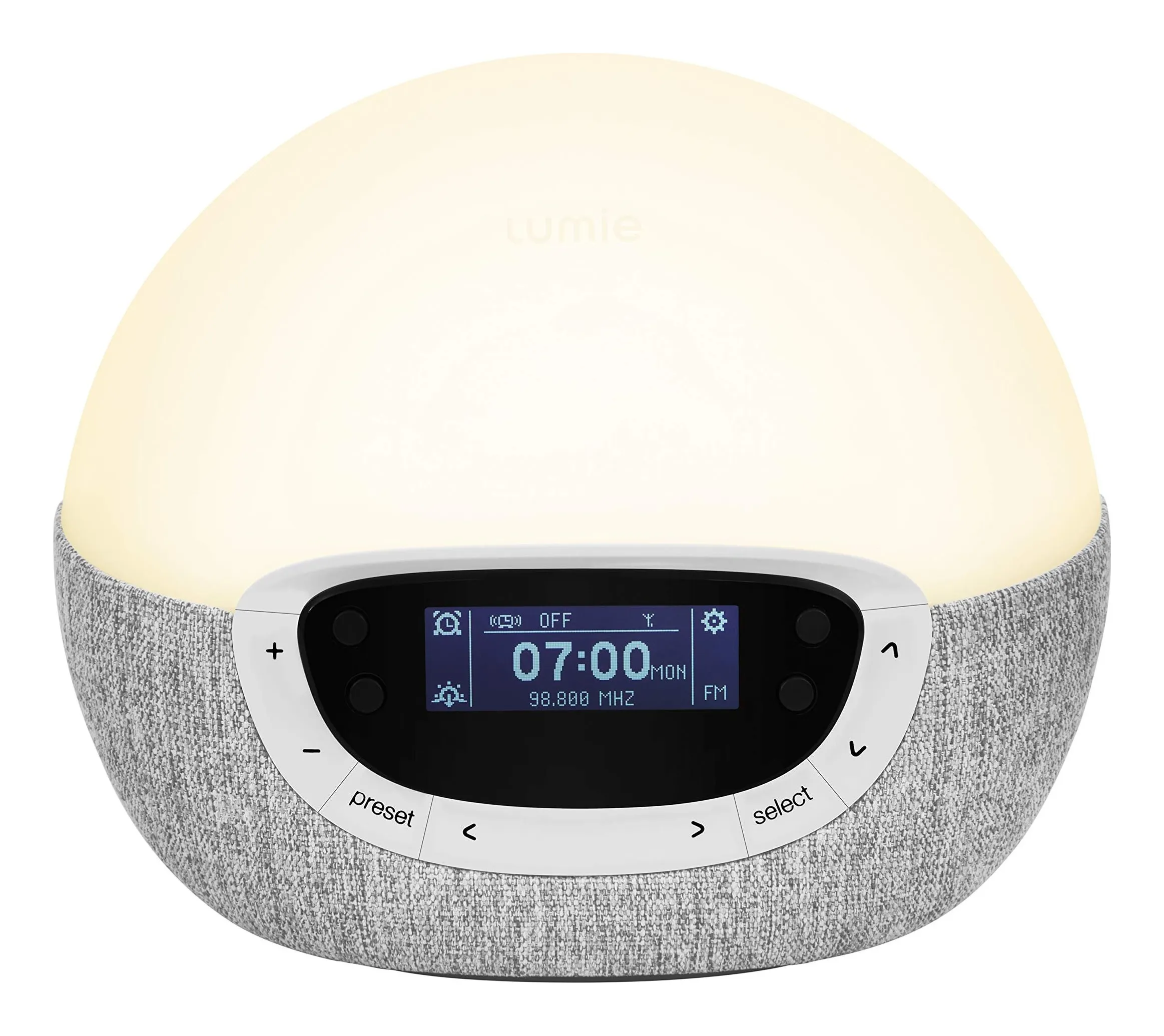
A wake-up light is a lamp on a timer: it brightens over a set number of minutes before the alarm so you surface slowly instead of being yanked awake in a dark British winter. The figures that matter are the sunrise length and whether you can change it, the sounds and radio, the light colours, and the warranty. Six models from the two makers that publish those figures, Lumie and Philips, compared.
Comparison · Sleep
Lumie Bodyclock Glow 150 vs Philips SmartSleep HF3519/01: the two mid-range wake-up lights, on the makers' figures
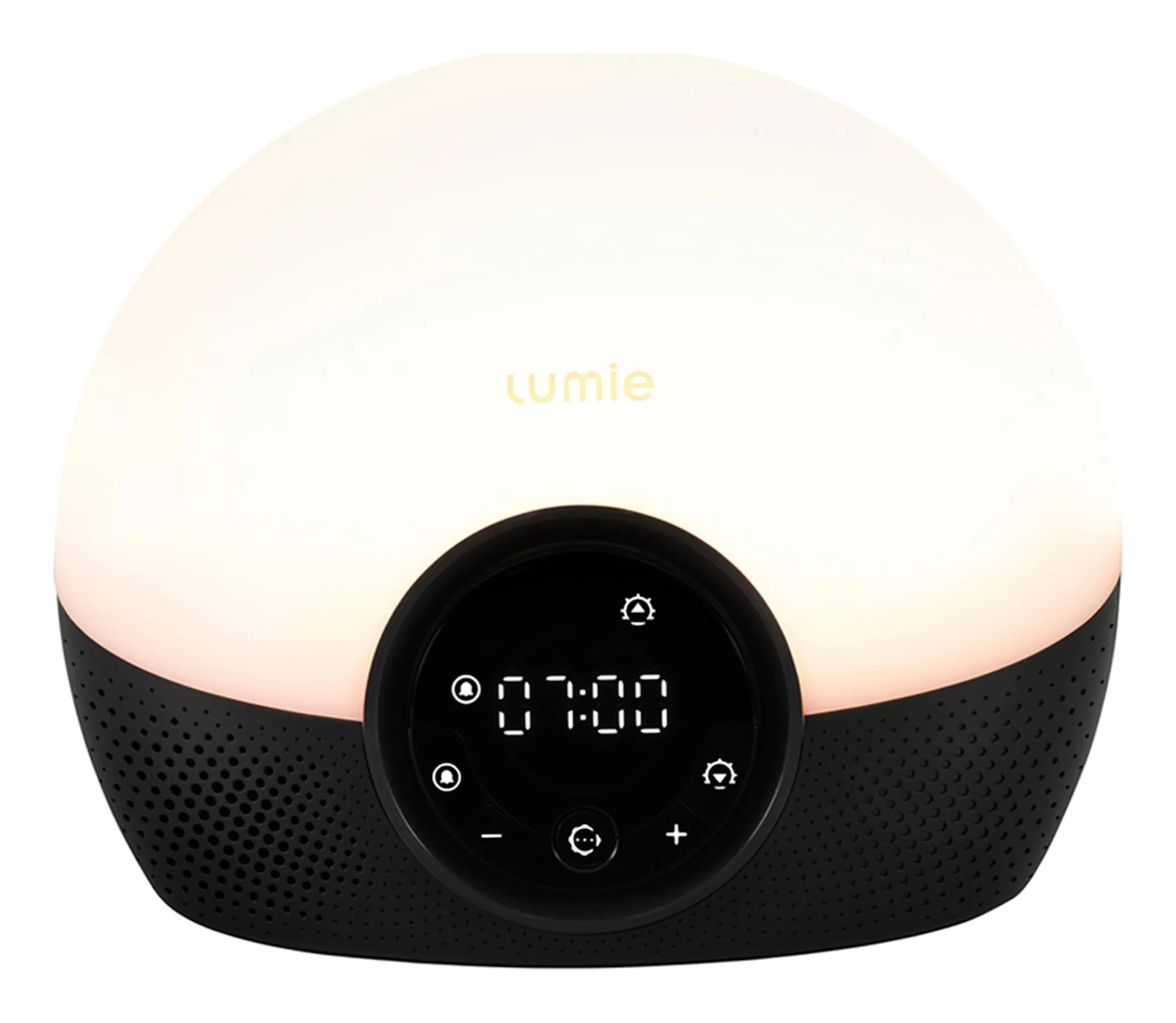
The two wake-up lights most people end up choosing between: a 565 g Lumie dome with three sunrise lengths, ten sounds and a three-year warranty, and a kilo of Philips dish with a stated 300 lux, two alarms and FM radio. Which one suits a bedroom comes down to whether two people wake at different times, how long a dawn you want, and whether the radio matters.
Review · Sleep
Lumie Bodyclock Shine 300 review: a 90-minute dawn, a radio, and the figures Lumie publishes
Lumie's top Bodyclock is the wake-up light with the longest dawn on the market, sunrise and sunset each adjustable from 15 to 90 minutes, plus FM radio, fourteen sounds and a display that dims itself. This review is about what the long sunrise is for, what the radio and sounds add, and where Lumie's figures and the listing's part company.