Shortlist · Sleep · 6 models
Best sunrise alarm clocks: six wake-up lights from Lumie and Philips, on the makers' own figures
A wake-up light is a lamp on a timer: it brightens over a set number of minutes before the alarm so you surface slowly instead of being yanked awake in a dark British winter. The figures that matter are the sunrise length and whether you can change it, the sounds and radio, the light colours, and the warranty. Six models from the two makers that publish those figures, Lumie and Philips, compared.
Quick answer
- 15–90minMost bedroomsLumie Bodyclock Glow 150: sunrise of 20, 30 or 45 minutes, ten sounds, tap snooze, three-year warranty.
- 20, 30 or 45minA long slow dawn with the radioLumie Bodyclock Shine 300: sunrise and sunset each 15 to 90 minutes, FM radio with presets, 14 sounds.
- 30 min (fixed)A first sunrise alarmLumie Bodyclock Rise 100: fixed 30-minute sunrise, beep, tap snooze, same warranty, lowest Bodyclock price.
- 30 min (fixed)A child's room or a tight budgetLumie Sunrise Alarm: 30-minute sunrise, five sounds, six mood colours, USB powered.
- 20–40minTwo alarm timesPhilips SmartSleep HF3519/01: 300 lux across 20 steps, two alarms, FM radio.
- 30minA red-to-yellow dawnPhilips HF3531/01: coloured sunrise, seven sounds, two alarms, radio.
The six at a glance
| Model | Sunrise length | Wake and sleep sounds | Radio | Light | Warranty | Where to buy |
|---|---|---|---|---|---|---|
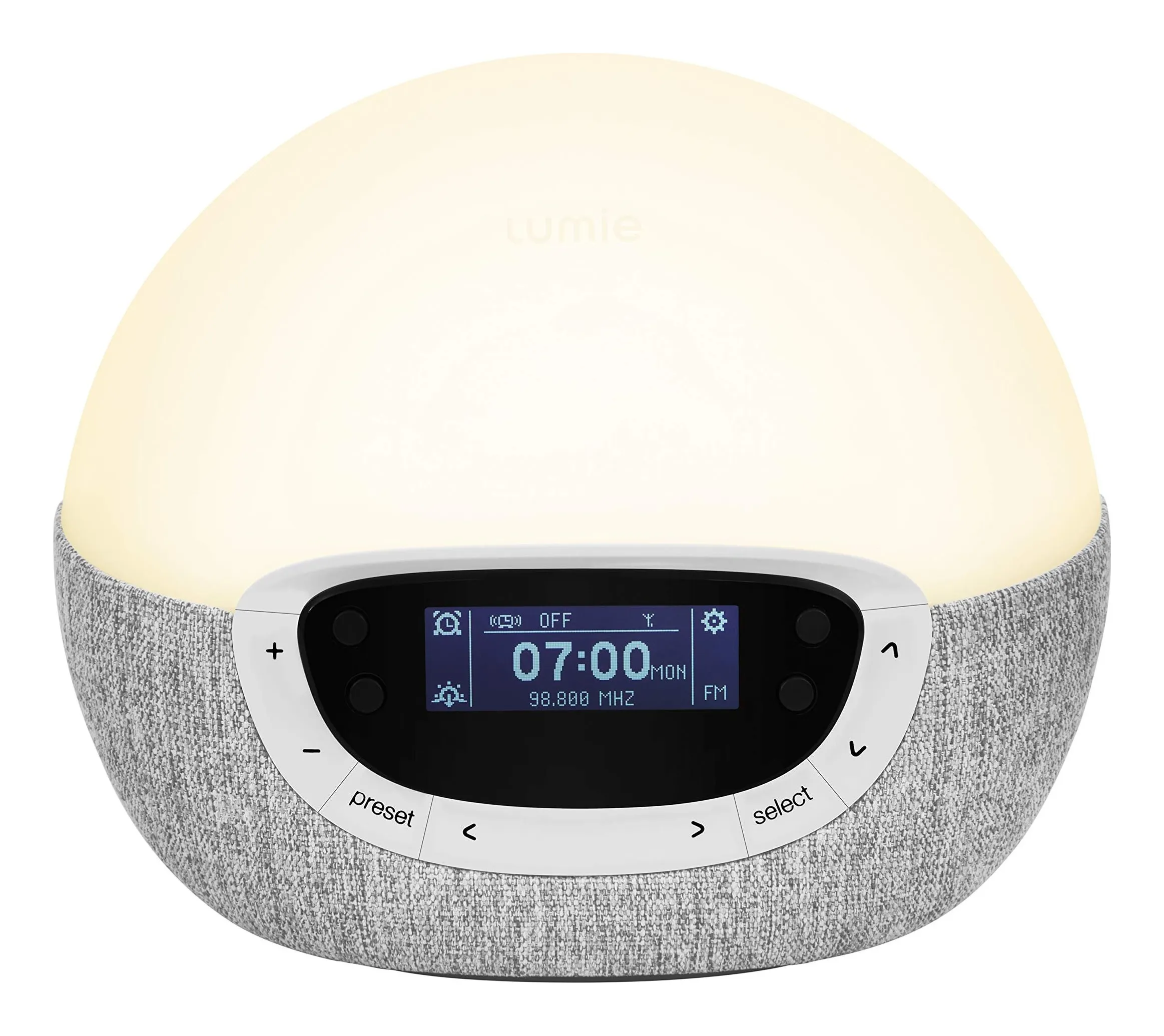
| Lumie Bodyclock Shine 300for a long, slow dawn with the radio | 15–90 min | 14† | FM, 5 presets | White, orange and red LEDs; dimmable bedside light | 3 years | View listing |
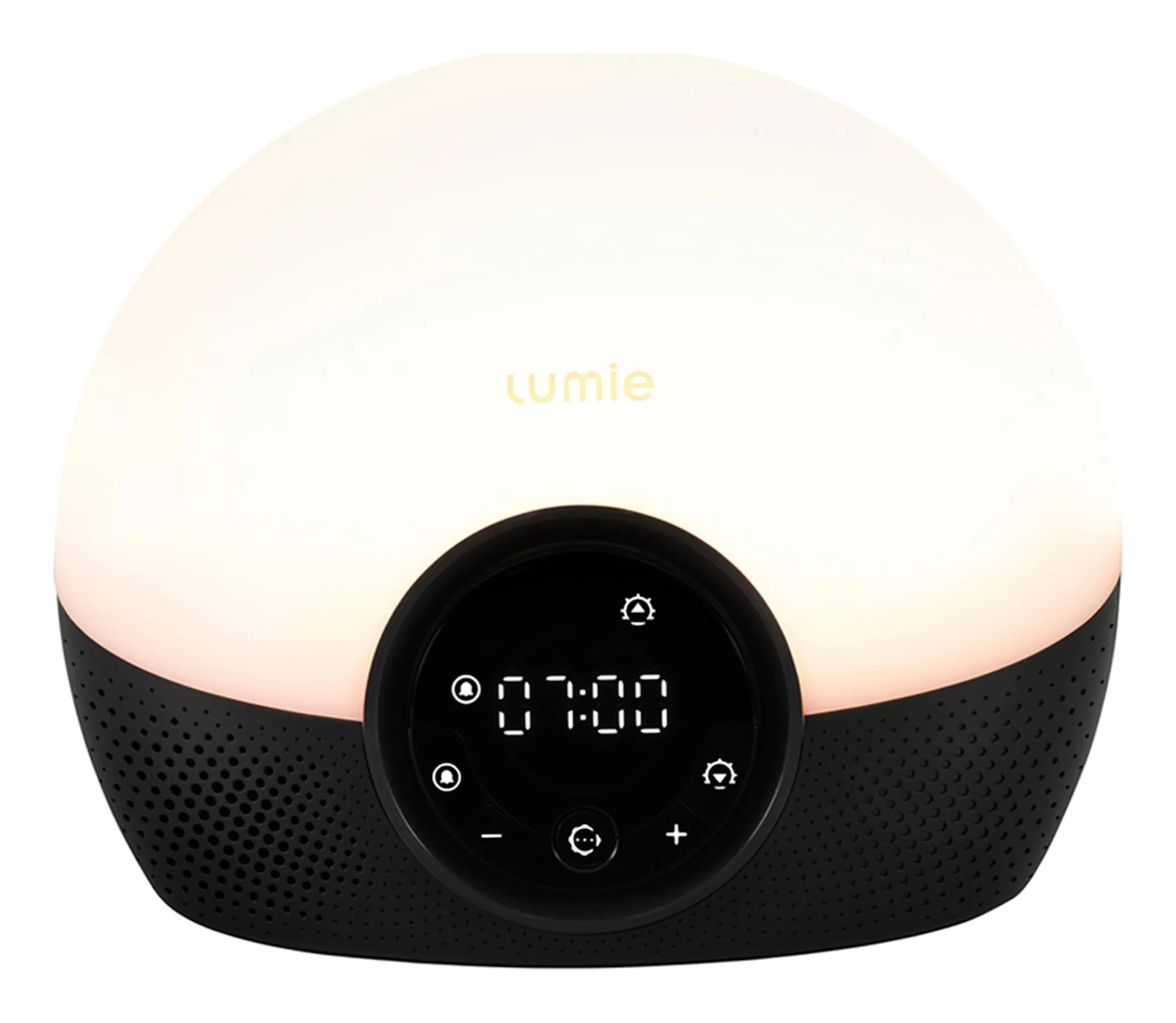
| Lumie Bodyclock Glow 150for most bedrooms | 20, 30 or 45 min | 10 | None | Warm white sunrise; dimmable bedside light and nightlight | 3 years | View listing |
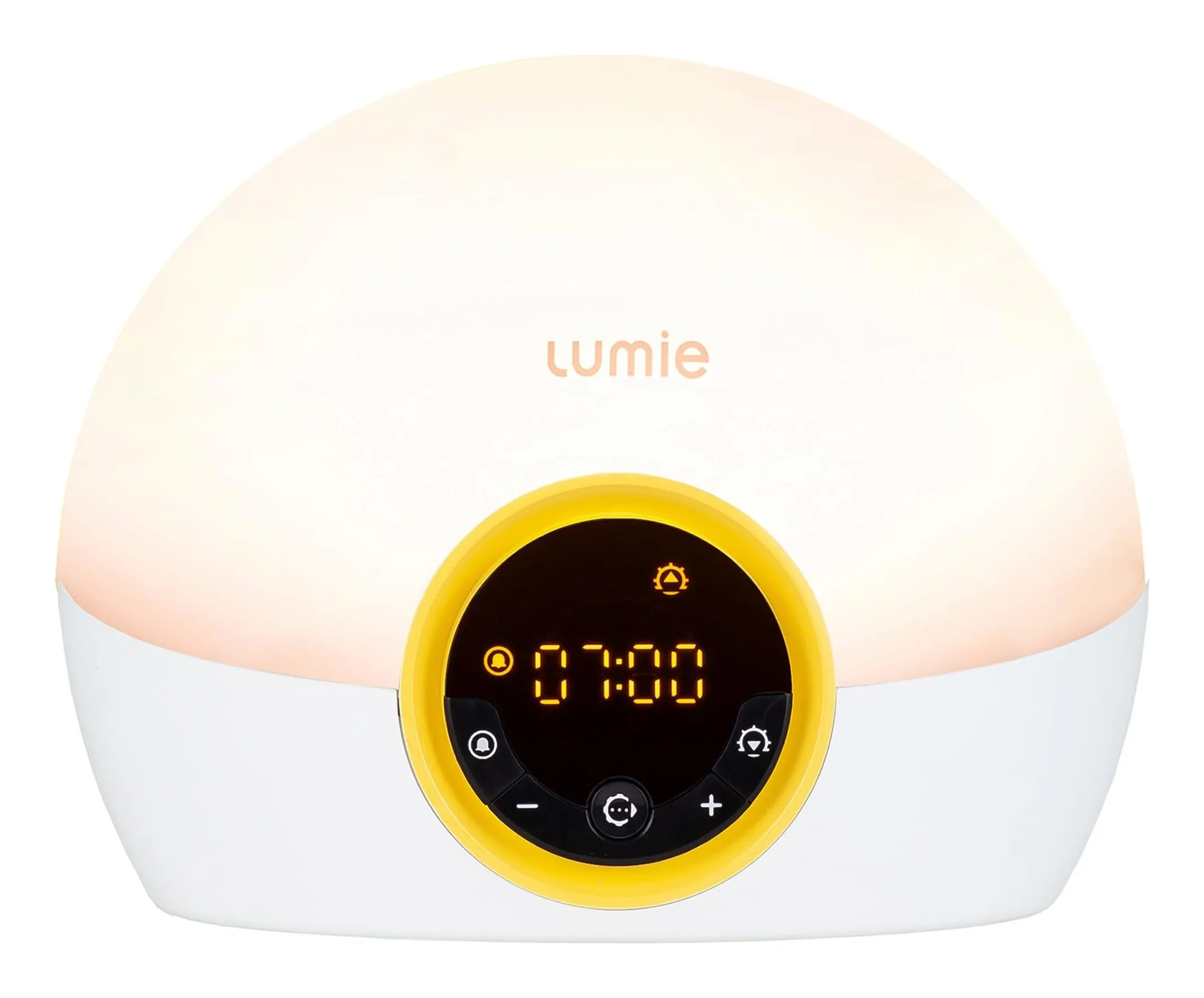
| Lumie Bodyclock Rise 100for a first sunrise alarm | 30 min (fixed) | Beep only | None | Warm white, orange and red LEDs; fade to nightlight | 3 years | View listing |
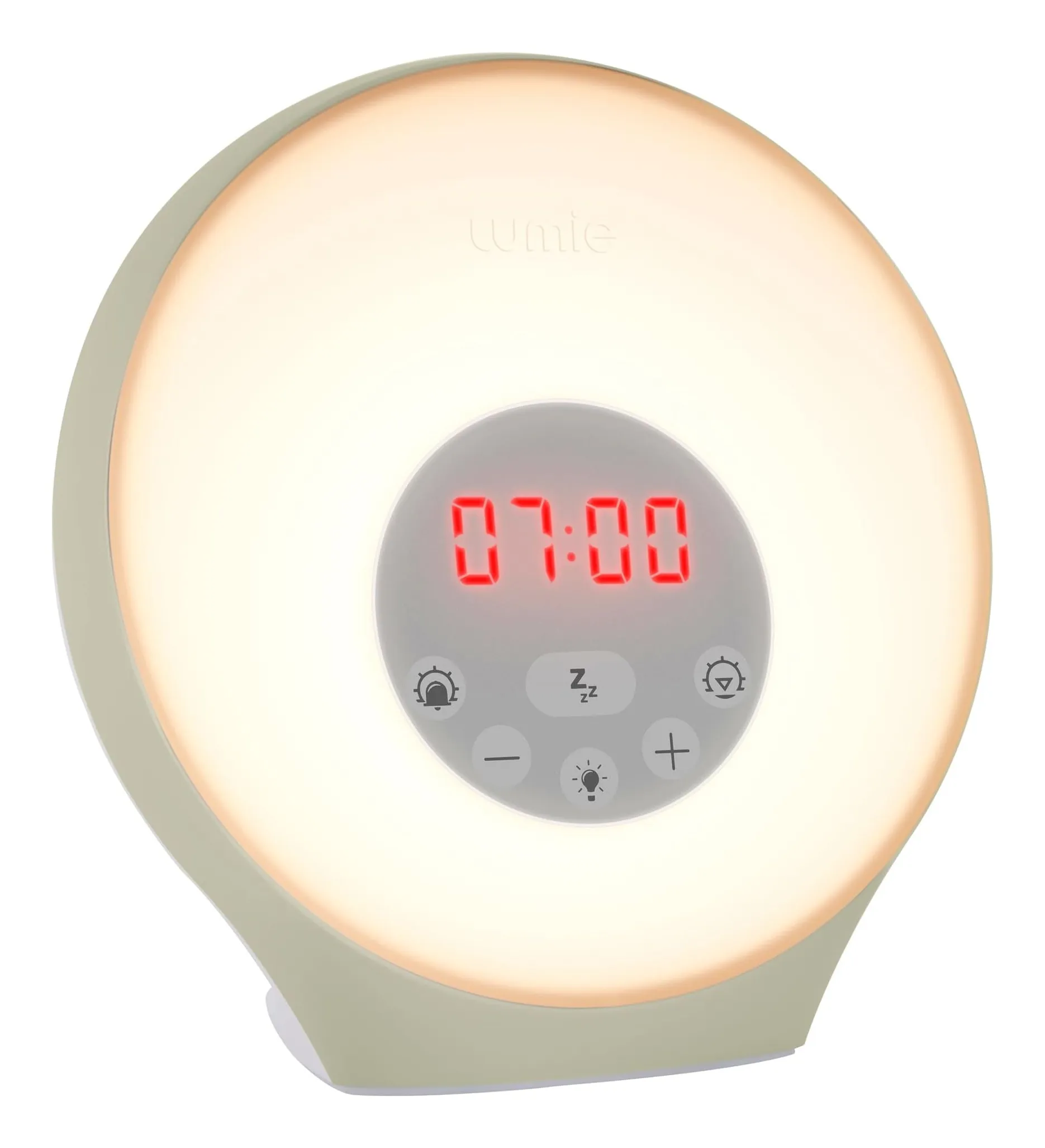
| Lumie Sunrise Alarmfor a child's room or a tight budget | 30 min (fixed)† | 5 natural sounds or a beep† | None† | Warm white sunrise plus 6 mood colours† | 3 years† | View listing |
| Philips SmartSleep Wake-up Light HF3519/01for a couple with two alarm times | 20–40 min | 5 | FM | Yellow to white sunrise (no red dawn) | 2 years | View listing |
| Philips Wake-up Light HF3531/01for a red-to-yellow dawn | 30 min† | 7 | FM | Coloured sunrise: red to orange to yellow; midnight light | No confirmed data | View listing |
Scroll sideways to see every column
† Figure from a retailer listing or otherwise awaiting confirmation from the manufacturer; other figures come from manufacturer manuals and leaflets.
Sunrise length is the maker’s stated range. Sounds are the maker’s count where the maker gives one; Lumie says 14 for the Shine 300 where the Amazon listing says 15, and the table shows Lumie’s number. The Sunrise Alarm’s figures are from its listing because Lumie’s page for it would not load for checking.
What a wake-up light does, and the number that decides it
Every model here is the same idea: an LED lamp that starts dim at a set time before the alarm and reaches full brightness as the alarm sounds. The variable that changes how it feels is the length of that ramp. Thirty minutes is the industry default and most people get on with it. Light sleepers sometimes want less; heavy sleepers, and anyone who has to be up at six in January, do better with 45 to 60 minutes, because the point is to be lifted out of deep sleep before the sound, and deep sleep does not care about a 20-minute ramp.
So the first question is whether the sunrise length is adjustable, and over what range. Then the sound: a beep, a set of nature sounds, or FM radio. Then the light colour, because a dawn that goes red to orange to white reads as morning in a way a plain white ramp does not. Then the sunset, the same ramp in reverse at bedtime, useful for children and for anyone who reads too late. The shortlist is ordered by those four things.
Lumie Bodyclock Shine 300, for a long slow dawn with the radio
for a long, slow dawn with the radio
Lumie Bodyclock Shine 300
- Sunrise length
- 15–90 min
- Wake and sleep sounds
- 14†
- Radio
- FM, 5 presets
- Light
- White, orange and red LEDs; dimmable bedside light
- Warranty
- 3 years
Check price on Amazon
The top of Lumie’s current Bodyclock range and the only lamp here with a sunrise that reaches 90 minutes. Both sunrise and sunset are set independently anywhere from 15 to 90 minutes in five-minute steps, the light runs through white, orange and red LEDs, and there is FM radio with five presets plus 14 sleep and wake sounds including white noise. The display dims itself to the room. Lumie gives it a three-year warranty and a 45-day trial.
It is the dearest Lumie, and the sound count differs between Lumie’s page and the listing, which is why the fact is marked as a conflict. Mains only, no battery backup.
For a deep sleeper, a dark north-facing bedroom or anyone who wants the radio, it is the one.
Strengths
- Sunrise and sunset lengths set independently, 15 to 90 minutes
- FM radio and 14 sounds, so it can replace the clock radio
- Three-year warranty and a 45-day trial from Lumie
Limitations
- The most expensive of the Lumie trio
- Sound count differs between Lumie's page (14) and the listing (15)
- Mains only, no battery backup
Good for
- a light sleeper who wants a long, slow dawn
- a bedroom where the radio matters
Look elsewhere if
- a child's room or a minimalist who wants one button
Lumie Bodyclock Glow 150, for most bedrooms
for most bedrooms
Lumie Bodyclock Glow 150
- Sunrise length
- 20, 30 or 45 min
- Wake and sleep sounds
- 10
- Radio
- None
- Light
- Warm white sunrise; dimmable bedside light and nightlight
- Warranty
- 3 years
Check price on Amazon
The middle Bodyclock drops the radio and the 90-minute ramp and keeps what most people use: a sunrise and sunset of 20, 30 or 45 minutes, ten sounds including waves and white noise, tap-the-top snooze, a nightlight and a dimmable bedside light. At 16 by 19 by 12 centimetres and 565 grams it sits on a narrow shelf. Same three-year warranty.
No radio, and no choice of light colour beyond the warm white ramp.
For one adult, or two who wake at the same time, it is the sensible buy.
Strengths
- Sunrise and sunset in 20, 30 or 45 minutes with adjustable peak brightness
- Ten sounds including white noise for the sunset
- Three-year warranty
Limitations
- No radio
- No choice of light colour
Good for
- most adults who want a sunrise alarm with a sleep sound
- a bedside that is short of space
Look elsewhere if
- someone who wakes to the radio
Lumie Bodyclock Rise 100, for a first sunrise alarm
for a first sunrise alarm
Lumie Bodyclock Rise 100
- Sunrise length
- 30 min (fixed)
- Wake and sleep sounds
- Beep only
- Radio
- None
- Light
- Warm white, orange and red LEDs; fade to nightlight
- Warranty
- 3 years
Check price on Amazon
The same dome as the Glow at a lower price, with the adjustments removed: the sunrise and sunset are fixed at 30 minutes, the alarm is an optional beep, snooze is a tap, and the sunset fades to a nightlight. The light is the same warm white, orange and red LED set and the warranty is the same three years.
Thirty minutes suits most people, which is why Lumie fixed it there, but if you turn out to need 45 you cannot have it.
For someone trying the idea before committing, or a spare room, it is the cheapest Bodyclock.
Strengths
- The cheapest way into Lumie's sunrise alarm
- Tap snooze and a fade-to-nightlight sunset
- Three-year warranty
Limitations
- Sunrise length is fixed at 30 minutes
- No sounds beyond a beep, no radio
Good for
- someone trying a sunrise alarm for the first time
- a spare room or a student
Look elsewhere if
- anyone who wants a slow 60- or 90-minute dawn
Lumie Sunrise Alarm, for a child’s room or a tight budget
for a child's room or a tight budget
Lumie Sunrise Alarm
- Sunrise length
- 30 min (fixed)†
- Wake sounds
- 5 natural sounds or a beep†
- Radio
- None†
- Light
- Warm white sunrise plus 6 mood colours†
- Warranty
- 3 years†
Check price on Amazon
Lumie’s small plastic wake-up light: a fixed 30-minute sunrise and sunset, five natural sounds or a beep, a five-minute snooze, six mood colours and USB power from a 5-volt adapter, so it runs from any bedside charger. The listing gives it the same three-year warranty as the Bodyclocks.
Its figures come from the listing because Lumie’s own page for it was rate-limited when we checked, so every fact is marked pending. It is a 5 W lamp and will not light a room to read by.
For a child who wants the colours, or a first try at the lowest price, it does the job.
Strengths
- The lowest price with the Lumie three-year warranty
- USB powered, so it runs from a bedside charger
- Six mood colours for a child's room
Limitations
- Fixed 30-minute sunrise
- Figures are from the listing, pending Lumie's page
- Plastic shell, lighter build than the Bodyclocks
Good for
- a child's bedroom
- a budget first sunrise alarm
Look elsewhere if
- anyone who wants radio or a long dawn
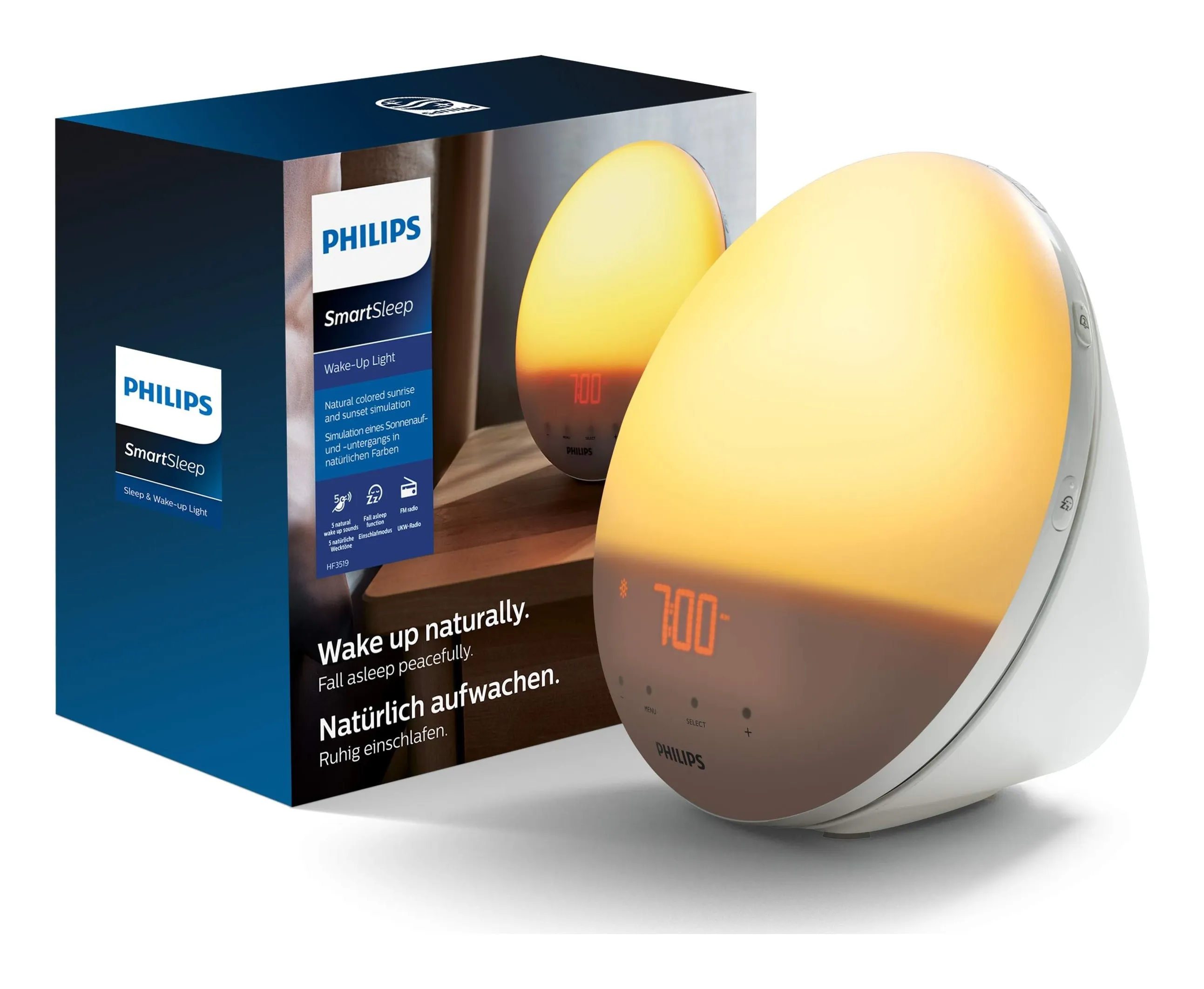
Philips SmartSleep HF3519/01, for two alarm times
for a couple with two alarm times
Philips SmartSleep Wake-up Light HF3519/01
- Sunrise length
- 20–40 min
- Wake sounds
- 5
- Radio
- FM
- Light
- Yellow to white sunrise (no red dawn)
- Warranty
- 2 years
Check price on Amazon
The Philips model whose specification table is complete: 20 brightness settings up to 300 lux, a sunrise adjustable from 20 to 40 minutes (30 by default), five natural sounds, FM radio, two independent alarms, snooze and a dimming sunset. It is a 20-centimetre dish tilted back on a stand, 16.5 watts, with a two-year guarantee.
The sunrise goes yellow to white on this model, with no red dawn phase, and the range stops at 40 minutes. It is larger and heavier than the Lumie domes.
For a couple who get up at different times, the two alarms decide it; it is also the brightest reading lamp here by the maker’s figure.
Strengths
- Brightness stated: 300 lux across 20 steps
- Two alarms, so a couple can wake at different times
- FM radio and five sounds
Limitations
- Sunrise only from 20 to 40 minutes
- Sunrise goes yellow to white, no red dawn phase on this model
- Heavier and larger than the Lumie domes
Good for
- a couple with different alarm times
- someone who wants a bright reading lamp as well
Look elsewhere if
- a narrow bedside shelf
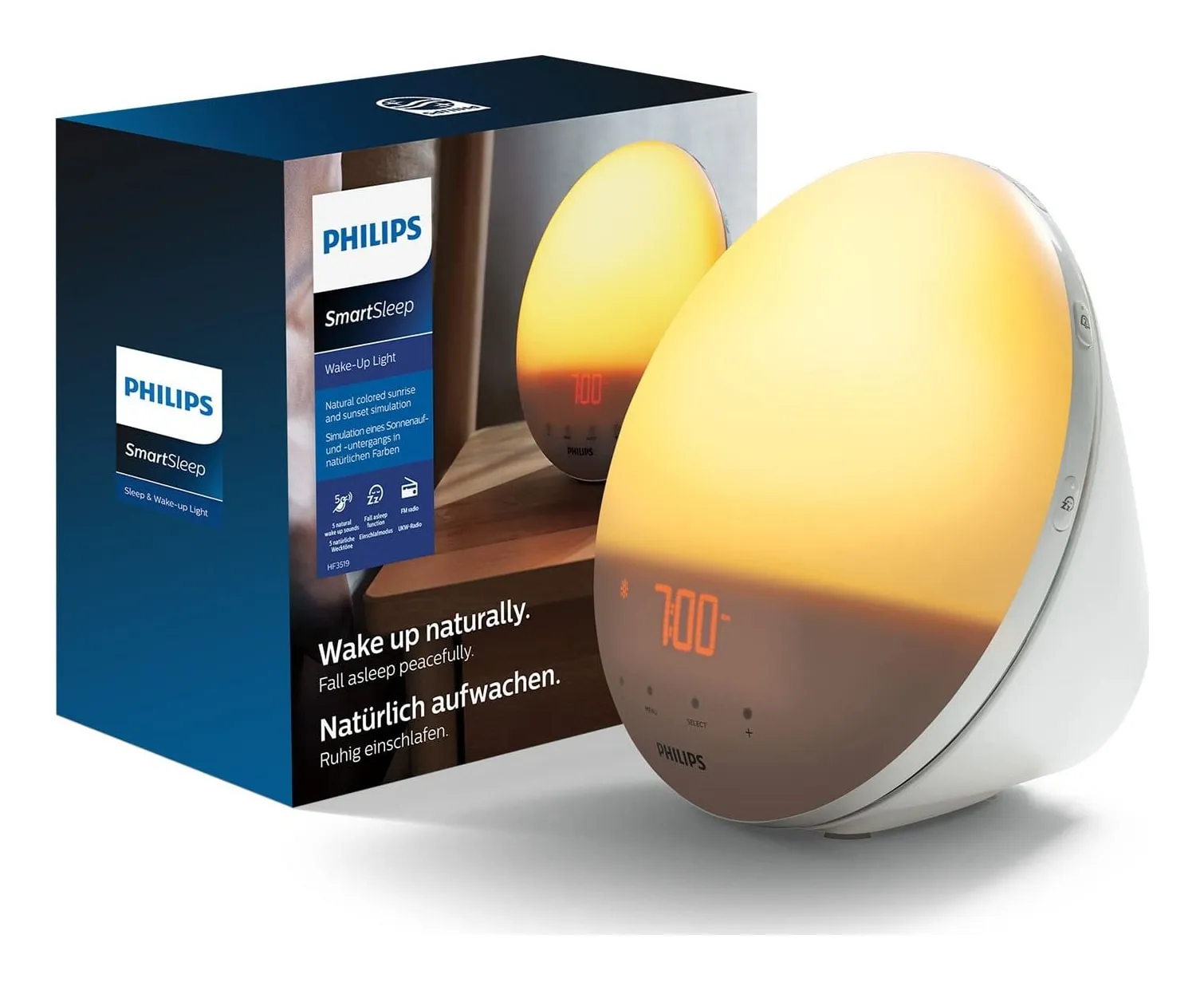
Philips HF3531/01, for a red-to-yellow dawn
for a red-to-yellow dawn
Philips Wake-up Light HF3531/01
- Sunrise length
- 30 min†
- Wake sounds
- 7
- Radio
- FM
- Light
- Coloured sunrise: red to orange to yellow; midnight light
Check price on Amazon
The Philips with the coloured sunrise: red through orange to yellow, 20 brightness steps, seven natural sounds, FM radio, two alarms and a dim orange midnight light for finding the door. Philips’ leaflet confirms the colours, sound count, alarms and 16.5-watt rating; the 30-minute sunrise and the 300 lux are from the listing and are marked as such.
Availability was unknown when we imported it, and Philips’ leaflet does not give a sunrise range.
For someone who wants the dawn colours and the radio in one lamp, it is the alternative to the Shine 300.
Strengths
- A red-to-yellow dawn, closer to the real thing than the HF3519's yellow
- Seven sounds, two alarms, FM radio
- Midnight light for finding the door
Limitations
- Sunrise length and lux figure come from the listing, not Philips
- Availability on Amazon was unknown at import
Good for
- someone who wants the dawn colours and the radio
Look elsewhere if
- anyone who needs an adjustable sunrise length
How to choose
- Sunrise length. Adjustable to 45 minutes or more: Shine 300, Glow 150. Fixed at 30: Rise 100, Sunrise Alarm. 20 to 40: both Philips.
- Sound. Radio: Shine 300, both Philips. Nature sounds only: Glow 150, Sunrise Alarm. Beep: Rise 100.
- Light colour. A red dawn phase: Lumie Bodyclocks, Philips HF3531. Yellow to white: Philips HF3519.
- Two alarms. Only Philips.
- Warranty. Lumie three years; Philips two.
Who should buy a smart bulb instead
If you already own a smart speaker and a colour bulb in a bedside lamp, a sunrise routine in the app does the same ramp for the price of nothing, with a less reliable alarm and no snooze you can hit half asleep. The lamps here are for the bedside where the alarm has to work every day without a phone.
Which one, by situation
- Deep sleeper, dark room: Lumie Bodyclock Shine 300.
- One adult, standard bedroom: Lumie Bodyclock Glow 150.
- First try, lowest Bodyclock price: Lumie Bodyclock Rise 100.
- Child’s room, USB power: Lumie Sunrise Alarm.
- Two alarm times: Philips HF3519/01.
- Coloured dawn with radio: Philips HF3531/01.
Sources
Facts checked 23 October 2026
- Lumie — Bodyclock Shine 300 product page and user guide — Manufacturer documentation, checked 23 October 2026
- Amazon listing (Lumie) — Retailer listing, checked 23 October 2026
- Lumie — Bodyclock Glow 150 product page — Manufacturer documentation, checked 23 October 2026
- Amazon listing (Lumie) — Retailer listing, checked 23 October 2026
- Lumie — Bodyclock Rise 100 product page and user guide — Manufacturer documentation, checked 23 October 2026
- Amazon listing (Lumie) — Retailer listing, checked 23 October 2026
- Amazon listing (Lumie) — Retailer listing, checked 23 October 2026
- Philips UK — SmartSleep Wake-up Light HF3519/01 product page and specifications — Manufacturer documentation, checked 23 October 2026
- Amazon listing (PHILIPS) — Retailer listing, checked 23 October 2026
- Amazon listing (PHILIPS) — Retailer listing, checked 23 October 2026
- Philips — HF3531/01 product leaflet (documents.philips.com) — Product manual, checked 23 October 2026
Do wake-up lights actually work?
They work for the thing they do: light rising in the room over 20 to 90 minutes brings you out of deep sleep gradually, so the alarm, when it comes, lands on someone half awake. They do not replace sleep you have not had, and they do nothing for a sleeper who faces the wall. Put the lamp on the side you face.
How long should the sunrise be?
Thirty minutes is the default on every model here and suits most people. Deep sleepers do better with 45 to 60 minutes, which only the Lumie Shine 300 (15 to 90 minutes) and Glow 150 (20, 30 or 45) allow; the Rise 100 and Sunrise Alarm are fixed at 30 and the Philips models run 20 to 40.
Lumie or Philips?
Lumie publishes more: the sunrise range, the sound count, the dimensions, the three-year warranty. Philips publishes the brightness, 300 lux, and offers two alarms, which Lumie does not. If two people wake at different times, Philips; otherwise the Lumie Glow 150 is the sensible middle.
Can I use one as a bedside lamp?
All six double as a dimmable bedside light. Lumie's Bodyclocks and the Philips HF3519 are bright enough to read by; the Sunrise Alarm is a 5 W USB lamp and is not.
Related reading
Shortlist · Sleep
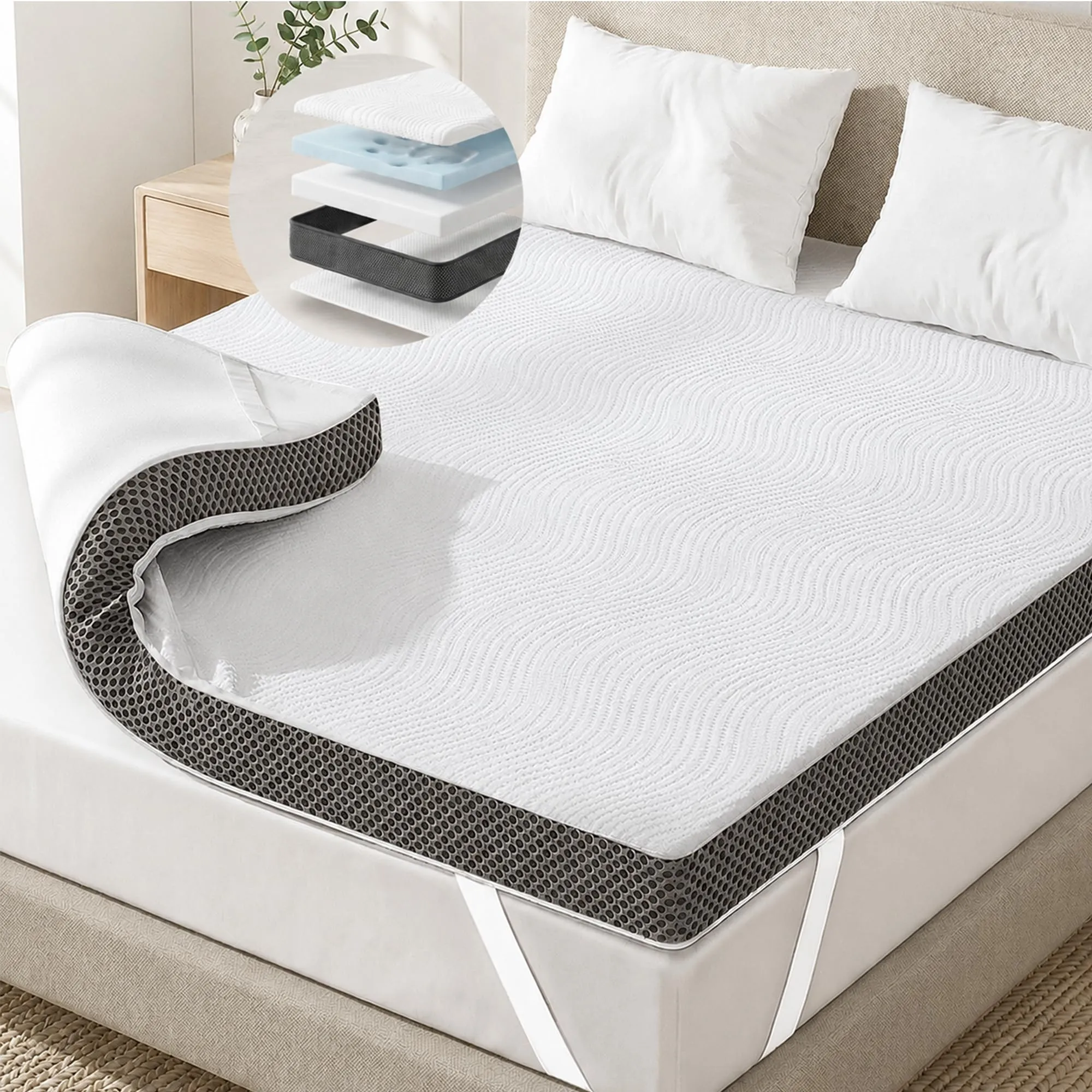
Best mattress toppers for a double bed: foam and fibre from 2.5 to 10 cm, by what each one can fix
A topper is sold as one product and does three jobs: a fibre pad freshens a surface, a deep fibre topper softens a hard bed, and a two-layer foam topper changes how a tired mattress supports you. Buy the wrong kind and you get a hot, sagging or pointless layer. Six toppers for a UK double (135 by 190 cm) from Silentnight and three foam makers, compared on depth, fill, fixing and washing.
Guide · Sleep
How to choose a mattress topper: depth, foam or fibre, the cover, and the UK bed sizes
Toppers are sold on a depth in centimetres and a word like memory foam or hollowfibre, and neither tells you whether the thing will fix your bed. This guide explains what depth actually buys, how foam and fibre differ in support, heat and lifespan, what to look for in the cover and the fixing, and the UK sizes, with four toppers from our shortlist as worked examples.