Review · Sleep · 1 model
Lumie Bodyclock Shine 300 review: a 90-minute dawn, a radio, and the figures Lumie publishes
Lumie's top Bodyclock is the wake-up light with the longest dawn on the market, sunrise and sunset each adjustable from 15 to 90 minutes, plus FM radio, fourteen sounds and a display that dims itself. This review is about what the long sunrise is for, what the radio and sounds add, and where Lumie's figures and the listing's part company.
Verdict
What it is
the wake-up light reviewed
Lumie Bodyclock Shine 300
- Sunrise length
- 15–90 min
- Wake and sleep sounds
- 14†
- Radio
- FM, 5 presets
- Warranty
- 3 years
Check price on Amazon
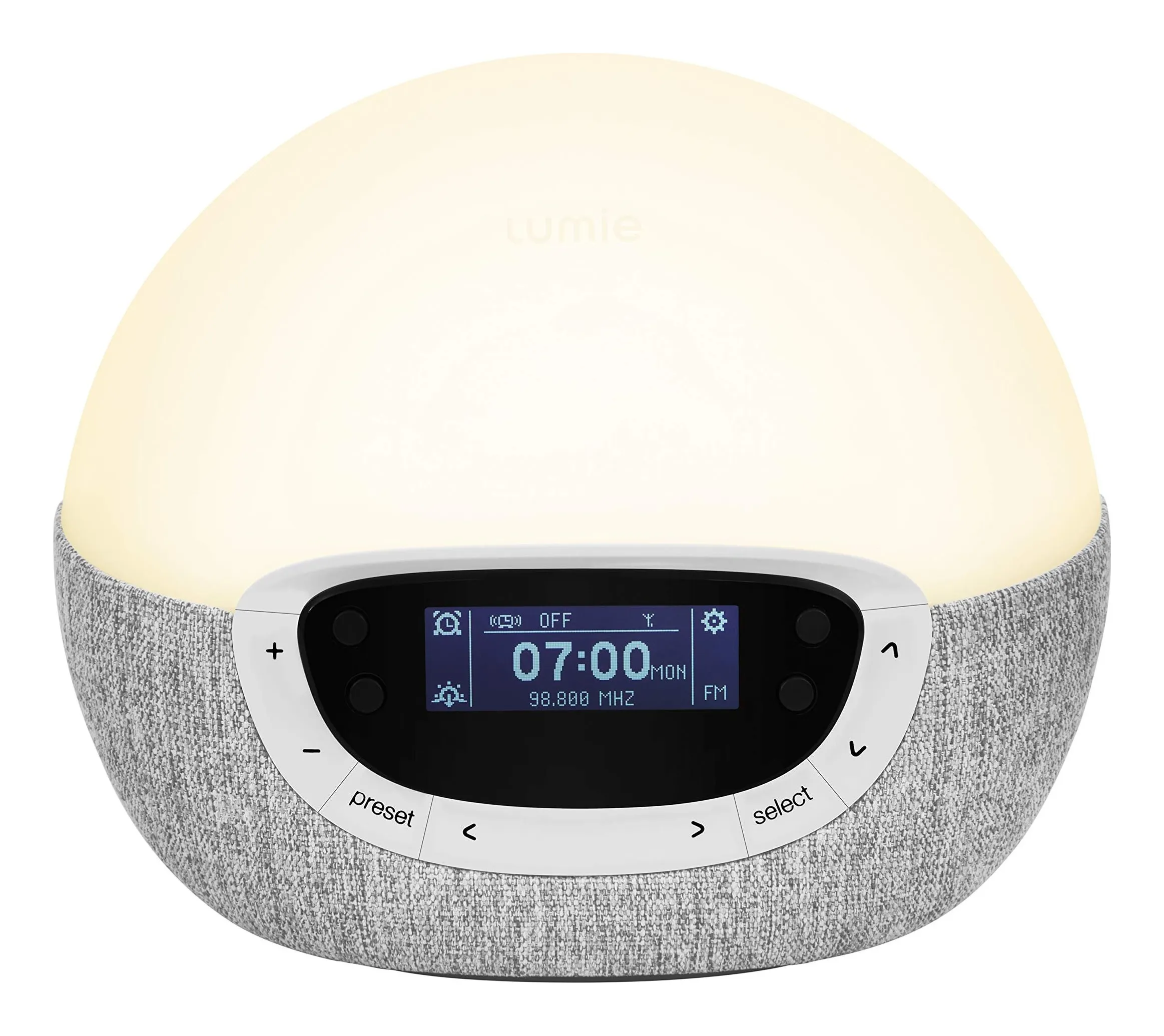
A fabric-fronted wake-up light, 18 by 21 by 12 centimetres and 650 grams, with white, orange and red LEDs, a sunrise and a sunset each adjustable from 15 to 90 minutes in five-minute steps, fourteen sleep and wake sounds including white noise, FM radio with five presets, a tap-controlled snooze and a display that dims itself to the room. Mains powered on a 1.8 m cable, three-year warranty. All from Lumie’s page and user guide.
Strengths
- Sunrise and sunset lengths set independently, 15 to 90 minutes
- FM radio and 14 sounds, so it can replace the clock radio
- Three-year warranty and a 45-day trial from Lumie
Limitations
- The most expensive of the Lumie trio
- Sound count differs between Lumie's page (14) and the listing (15)
- Mains only, no battery backup
Good for
- a light sleeper who wants a long, slow dawn
- a bedroom where the radio matters
Look elsewhere if
- a child's room or a minimalist who wants one button
The dawn
The sunrise starts as a dim red, runs through orange and finishes white at a brightness you choose, over the time you choose. At 30 minutes it works as every wake-up light works. At 60 or 90 it does something the others cannot: it lifts a deep sleeper out of the last sleep cycle slowly enough that the sound, when it comes, lands on someone already half awake. The sunset does the same in reverse, from white to red to a night light or off, with a sleep sound if you want one.
The sounds and the radio
Fourteen sounds by Lumie’s count, with white noise and waves for bedtime and birds and the like for waking, and FM radio with five presets as an alternative wake sound. For anyone replacing a clock radio, this is the Bodyclock that does not lose a function. The listing says fifteen sounds; we record Lumie’s fourteen and flag it.
The display and the lamp
The display dims itself with a light sensor, so it is readable in daylight and faint at night. As a lamp, the white LEDs dim to reading level, and the red and orange settings serve as a night light. It is a proper bedside lamp as well as an alarm.
Size, power and warranty
Lumie’s dimensions are 18 by 21 by 12 centimetres; the listing’s are not usable, so we use Lumie’s. 650 grams. Mains only, 1.8 m cable, no battery backup stated. Three-year warranty and a 45-day trial, both Lumie’s own terms.
Strengths
- Sunrise and sunset lengths set independently, 15 to 90 minutes
- FM radio and 14 sounds, so it can replace the clock radio
- Three-year warranty and a 45-day trial from Lumie
Limitations
- The most expensive of the Lumie trio
- Sound count differs between Lumie's page (14) and the listing (15)
- Mains only, no battery backup
Good for
- a light sleeper who wants a long, slow dawn
- a bedroom where the radio matters
Look elsewhere if
- a child's room or a minimalist who wants one button
Who should buy it
A deep sleeper, anyone with a north-facing or blacked-out bedroom, anyone who wakes to the radio, and anyone who wants the lamp to double as a bedside light with a night-light setting. It is the complete wake-up light.
Who should not
A light sleeper who will use the 30-minute default and never touch the radio, for whom the Glow 150 is the same dome with the extras removed. A couple who wake at different times, who need the Philips HF3519’s two alarms. Anyone who needs the alarm to survive a power cut.
Sources
Facts checked 23 October 2026
- Lumie — Bodyclock Shine 300 product page and user guide — Manufacturer documentation, checked 23 October 2026
- Amazon listing (Lumie) — Retailer listing, checked 23 October 2026
Is a 90-minute sunrise too long?
For most people, yes; 30 minutes is Lumie's default and suits light and average sleepers. The 60 to 90 minute settings are for deep sleepers and for anyone whose alarm is before six in a British winter, when the light has to do the work the window cannot. Having the range is the point; you will probably settle at 30 or 45.
How many sounds does it have?
Lumie's page says 14; the Amazon listing title says 15. We record Lumie's number and flag the conflict. Either way they include white noise and nature sounds for the sunset side, and the FM radio with five presets is separate.
Can it be a bedside lamp?
Yes: the white LEDs dim to a reading level and the orange and red settings make a night light. The display dims itself with a light sensor, which is the detail you notice at two in the morning.
Does it keep time in a power cut?
It is mains only, with no battery backup stated by Lumie. If the power goes overnight, the alarm goes with it. A phone alarm as backup is sensible with any wake-up light.
Related reading
Shortlist · Sleep
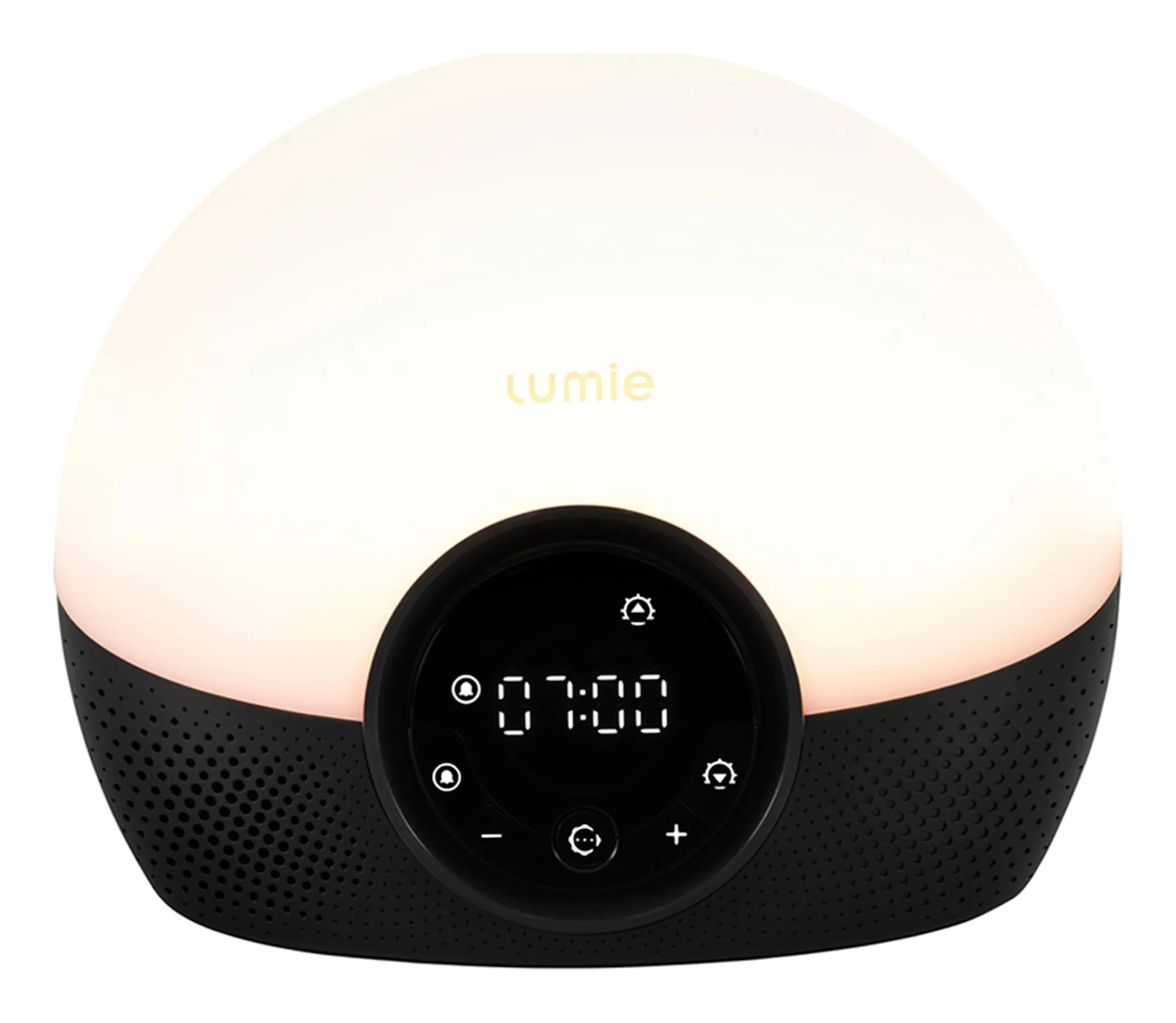
Best sunrise alarm clocks: six wake-up lights from Lumie and Philips, on the makers' own figures
A wake-up light is a lamp on a timer: it brightens over a set number of minutes before the alarm so you surface slowly instead of being yanked awake in a dark British winter. The figures that matter are the sunrise length and whether you can change it, the sounds and radio, the light colours, and the warranty. Six models from the two makers that publish those figures, Lumie and Philips, compared.
Comparison · Sleep
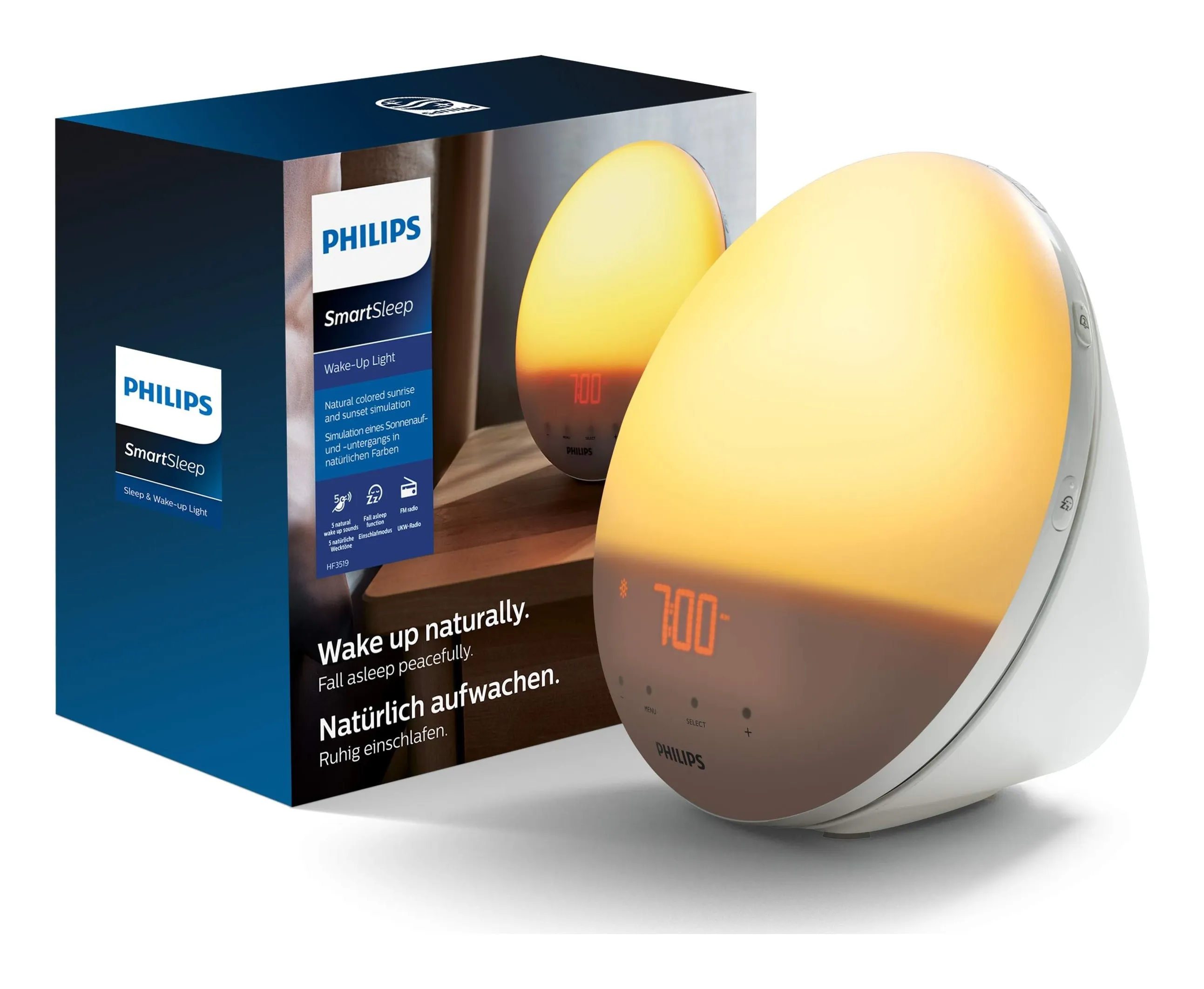
Lumie Bodyclock Glow 150 vs Philips SmartSleep HF3519/01: the two mid-range wake-up lights, on the makers' figures
The two wake-up lights most people end up choosing between: a 565 g Lumie dome with three sunrise lengths, ten sounds and a three-year warranty, and a kilo of Philips dish with a stated 300 lux, two alarms and FM radio. Which one suits a bedroom comes down to whether two people wake at different times, how long a dawn you want, and whether the radio matters.
Guide · Sleep
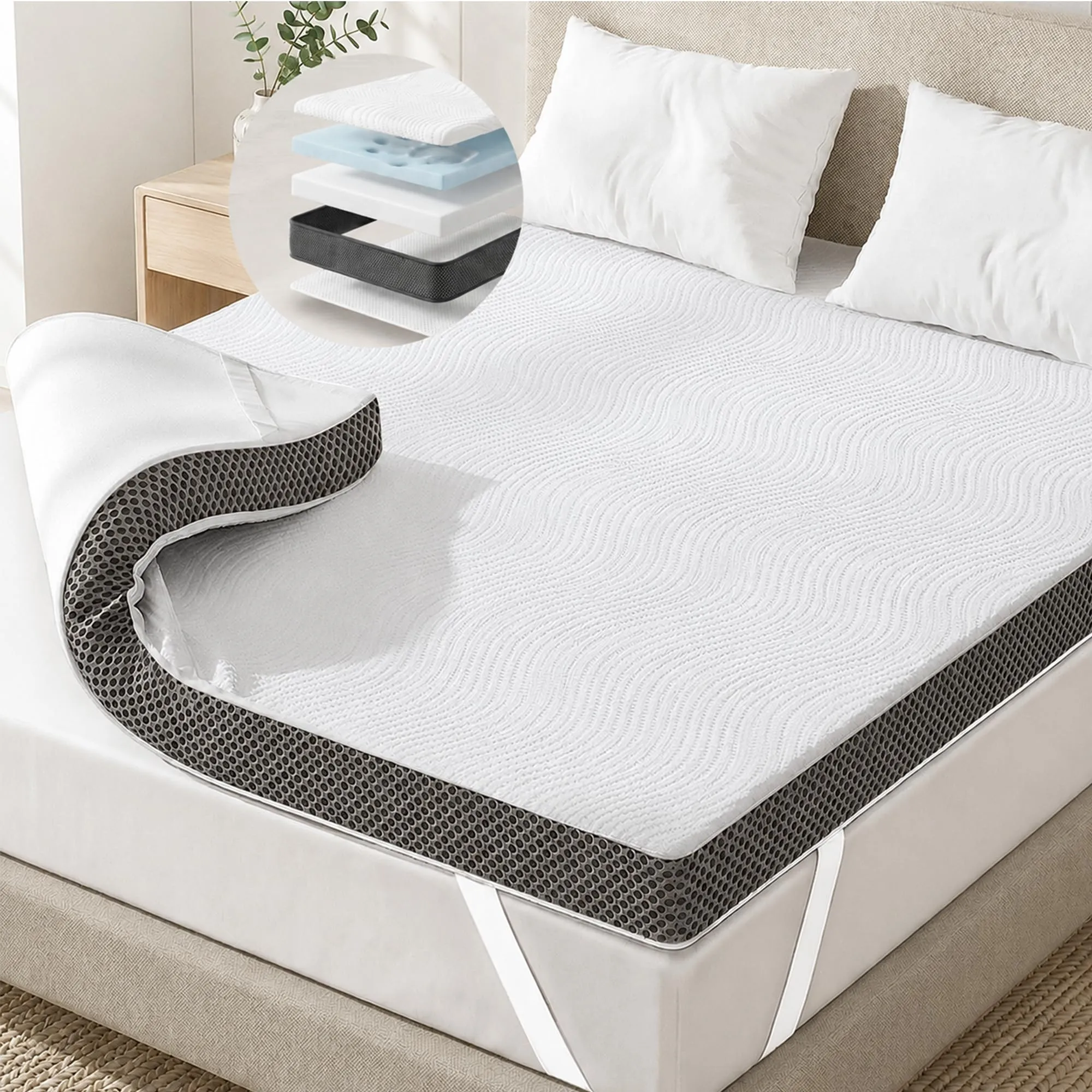
How to choose a mattress topper: depth, foam or fibre, the cover, and the UK bed sizes
Toppers are sold on a depth in centimetres and a word like memory foam or hollowfibre, and neither tells you whether the thing will fix your bed. This guide explains what depth actually buys, how foam and fibre differ in support, heat and lifespan, what to look for in the cover and the fixing, and the UK sizes, with four toppers from our shortlist as worked examples.