Review · Bathroom · 1 model
Withings BodyFit review: the scale that measures the top half of you, and what the handle is for
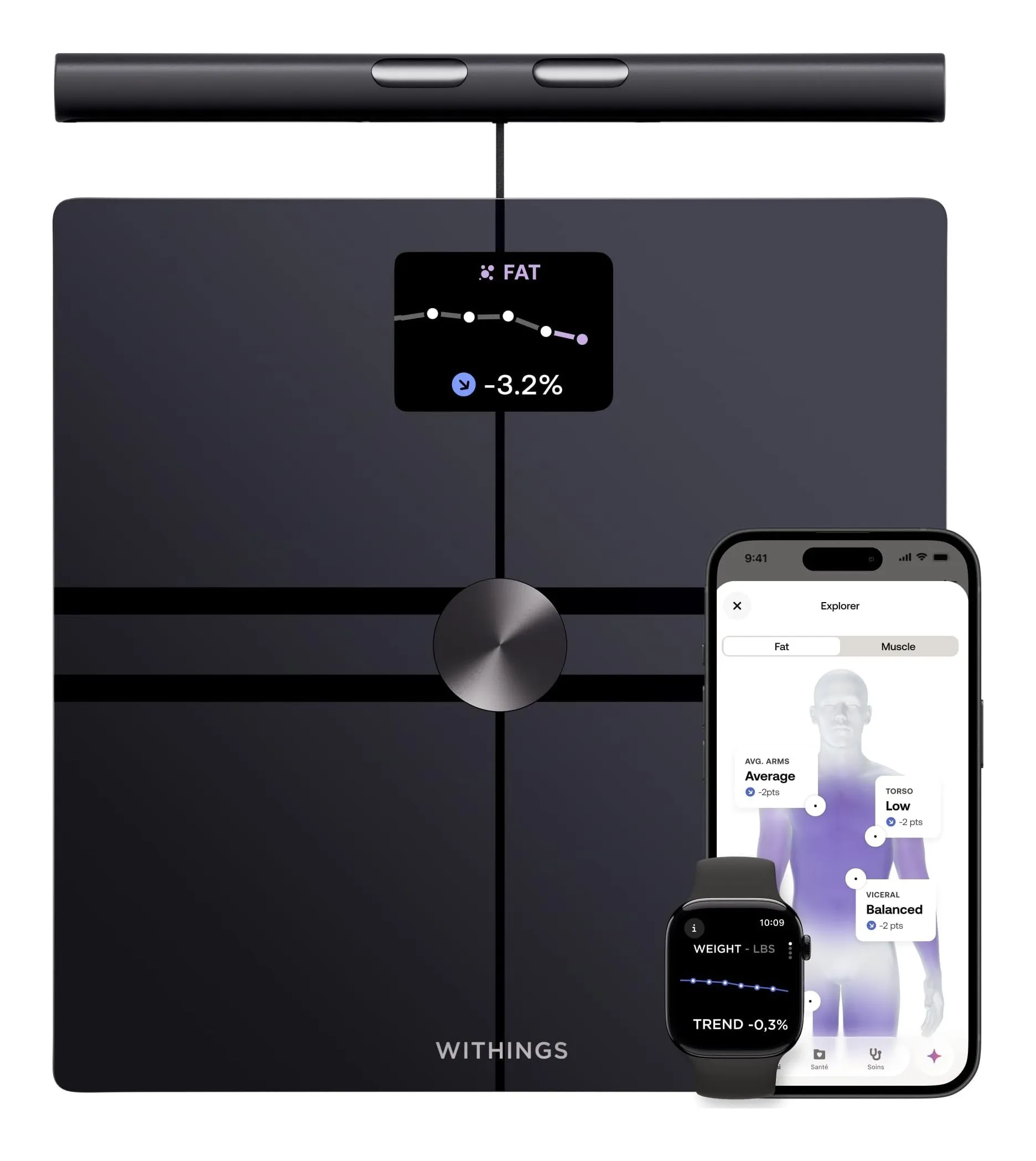
Every smart scale passes a current up one leg and down the other and estimates the rest of you. The BodyFit adds a handle with four more electrodes, so arms, legs, torso and abdomen are measured separately rather than inferred. This review is about what segmental analysis changes, what the 40-plus metrics are worth, and what Withings states and does not about the hardware.
Verdict
What it is
the scale reviewed
Withings BodyFit
- Maximum weight
- 200 kg
- Graduation
- 50 g
- Electrodes
- 8: four in the handle, four in the platform
- Connectivity
- Wi-Fi and Bluetooth
- Power
- Rechargeable, USB-C, up to 1 year
Check price on Amazon
A tempered-glass scale with a retractable handle. Eight electrodes, four in the platform and four in the handle; bioimpedance spectroscopy at 13 frequencies up to 800 kHz; six-zone analysis of arms, legs, torso and abdomen; more than 40 metrics; 5 to 200 kg at 50 g steps; a colour display; Wi-Fi and Bluetooth; a rechargeable battery charged by USB-C and rated by Withings for up to a year. 2.2 kg by the listing, two-year warranty.
Strengths
- Eight electrodes, six zones: segmental readings, not estimates
- Wi-Fi sync without a phone in the room
- Rechargeable, up to a year per charge
Limitations
- The price of three ordinary smart scales
- Display size is quoted inconsistently by Withings
- Heavy at 2.2 kg
Good for
- someone tracking muscle versus fat seriously, including on GLP-1 medication
- a household already in the Withings app
Look elsewhere if
- anyone who only wants weight and BMI
The handle
You step on, the scale recognises you by weight, and you pull the handle up and hold it for the few seconds of the scan. Current passes between every pair of electrodes, and the scale reports fat and muscle for each arm, each leg and the trunk, plus a visceral fat index. That is what a plain scale cannot do: it measures your legs and estimates your arms and trunk from averages. For anyone losing weight on medication, where the worry is muscle going with the fat, the per-limb muscle figure is the number that matters.
The metrics
Weight, fat and muscle mass, water, bone, visceral fat index, basal metabolic rate, heart rate, a vascular-age estimate and the segmental breakdown, with Withings’ app charting trends and its BodyPath goal tracker projecting the path to a target. Eight key figures show on the scale itself after each weigh-in, so the phone can stay in the other room.
Sync and power
Wi-Fi uploads without the phone nearby; Bluetooth is the fallback. The battery is rechargeable over USB-C and Withings rates it at up to a year, which removes the AAA cells every other scale here eats. The display’s size is quoted three ways on Withings’ own pages, which we have flagged; it is a colour screen big enough to read standing up.
Size and weight
A 2.2 kg scale with a handle that folds flat into the platform. It is bigger and heavier than a plain glass scale and it lives on the floor, not behind a door.
Strengths
- Eight electrodes, six zones: segmental readings, not estimates
- Wi-Fi sync without a phone in the room
- Rechargeable, up to a year per charge
Limitations
- The price of three ordinary smart scales
- Display size is quoted inconsistently by Withings
- Heavy at 2.2 kg
Good for
- someone tracking muscle versus fat seriously, including on GLP-1 medication
- a household already in the Withings app
Look elsewhere if
- anyone who only wants weight and BMI
Who should buy it
Someone tracking body composition seriously: a lifter watching muscle, a person on GLP-1 medication watching what the weight loss is made of, a household already in the Withings app with a watch or blood-pressure monitor.
Who should not
Anyone who wants weight and BMI with a trend graph, for whom the eufy P3 or a Salter does the job at a fraction of the price. Anyone who weighs with the phone in hand anyway and does not need Wi-Fi.
Sources
Facts checked 23 October 2026
- Withings — BodyFit product page, compare page and launch press release — Manufacturer documentation, checked 23 October 2026
- Amazon listing (Withings) — Retailer listing, checked 23 October 2026
What does the handle actually do?
It holds four of the eight electrodes. With electrodes at hands and feet the scale can pass current hand to hand, hand to foot and foot to foot, and from those paths it measures the arms, the legs and the trunk separately. A four-electrode scale measures the legs and assumes the rest from your height and age.
Is 40-plus metrics useful?
Eight appear on the scale's display after each weigh-in; the rest live in the app. Most people watch three: weight, fat mass and muscle mass, and with the BodyFit the muscle figure is per limb, which is the one that tells you whether a diet is costing muscle. The rest are for the curious.
How accurate is it?
Withings states 50 g resolution for weight and describes the body-composition method, bioimpedance spectroscopy across 13 frequencies up to 800 kHz, without an accuracy figure for fat or muscle. No consumer scale gives one. Treat the composition numbers as a consistent trend, measured the same way each morning.
What are the display's dimensions?
Withings' pages quote 2.8, 3.4 and 3.5 inches in different places, and we have flagged the fact as conflicting. It is a colour display that shows the key readings without a phone; the exact diagonal is the least important thing about it.
Related reading
Shortlist · Bathroom
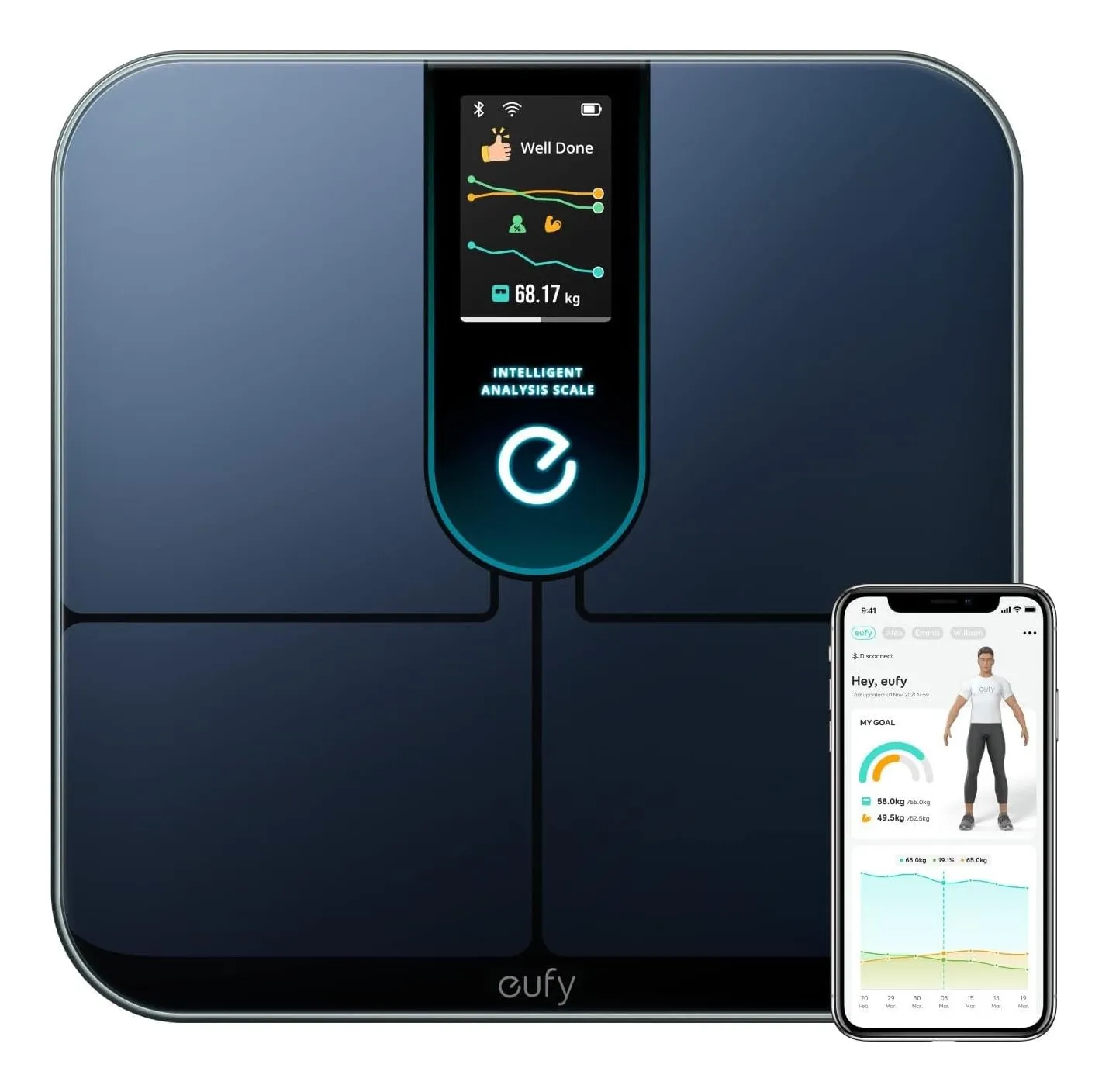
Best bathroom scales: six body-composition scales from a no-app Salter to the eight-electrode Withings
Every scale here does the same trick: a small current through your feet estimates fat, muscle and water from how your body resists it. What differs is the maximum weight, the step size, whether it syncs by Bluetooth, Wi-Fi or not at all, how many people it remembers, and whether it measures your top half or guesses it. Six scales from Salter, Renpho, eufy and Withings.
Shortlist · Bathroom
Best electric toothbrushes: six Oral-B and Sonicare models compared on sensors, modes and battery
An electric toothbrush is bought on a price tier and sold on a plaque percentage. What changes your brushing is plainer: a warning when you press too hard, how many days the battery lasts, a two-minute timer, and what the heads cost. Six brushes from the two makers that publish those figures, Oral-B and Philips Sonicare, from the cheapest round-head Oral-B to the DiamondClean with an app.
Comparison · Bathroom
Oral-B iO3 vs Philips Sonicare 3100: the two sensible electric toothbrushes, on sensors, battery and heads
The brush most dentists point at from each camp: Oral-B's cheapest model with the two-way pressure light, and Philips' cheapest with a pressure sensor at all. One oscillates with a round head and takes iO heads; the other buzzes at 31,000 movements and takes any Sonicare head. The decision is the sensor you will notice, the battery figure you can trust, and the heads you will buy for five years.