


Review · Bathroom · 1 model
Philips Sonicare DiamondClean 9000 review: four modes, a charging case and the app, and who needs them
Philips' upper-middle sonic brush: 62,000 movements a minute, four modes at three intensities, a pressure light at the base, BrushSync head recognition, Bluetooth to the Sonicare app, and a travel case that charges the brush from USB. This review is about what twelve settings are for, what the light and the app tell you, why the battery is shorter than the 5300's, and what the case changes.
Verdict
What it is
the toothbrush reviewed
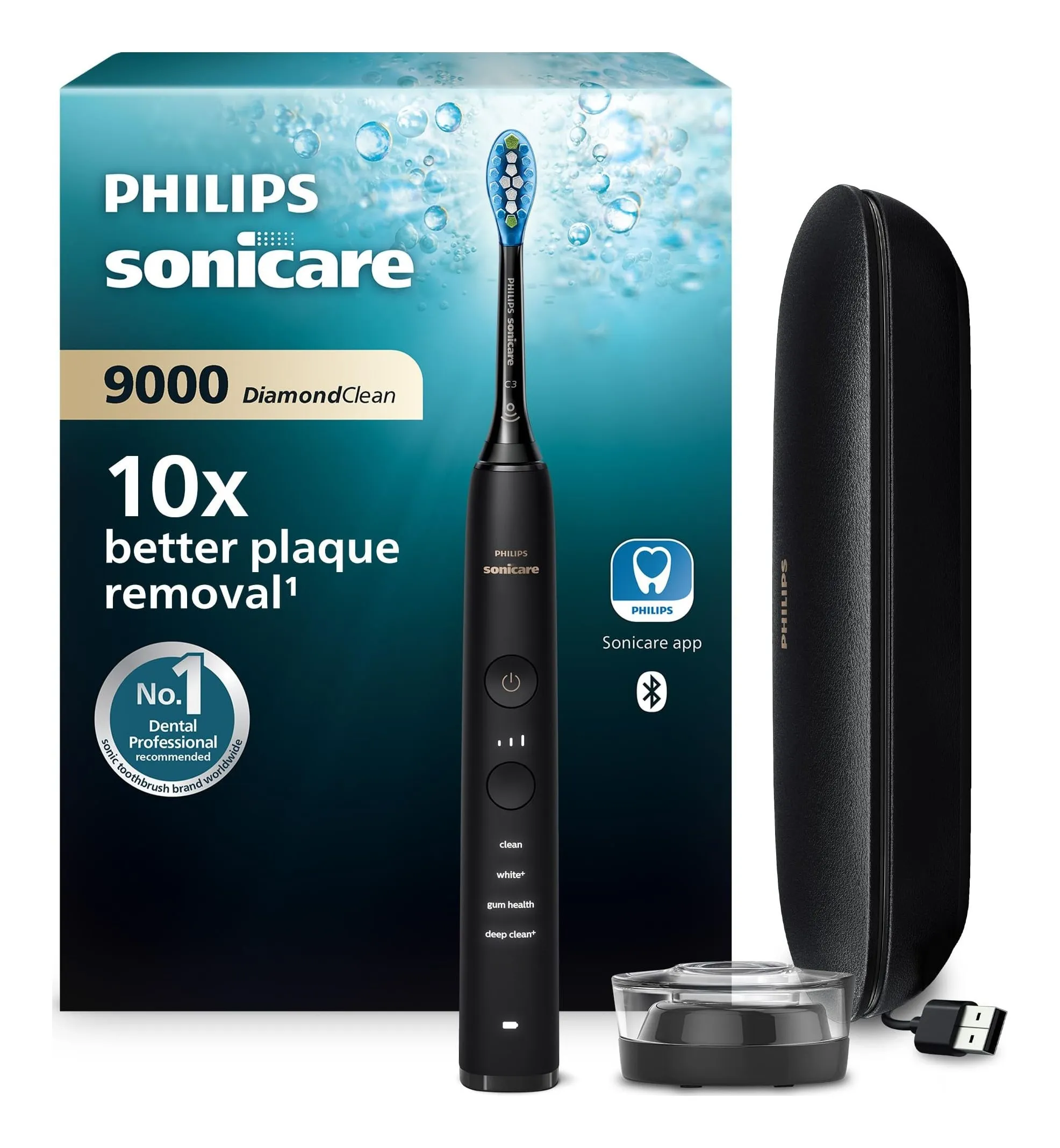
Philips Sonicare DiamondClean 9000 (HX9911/39)
- Modes
- 4 modes
- Pressure sensor
- Yes: light ring at the base
- Movements
- 62,000 per minute
- Battery
- 14 days
- Head reminder
- BrushSync: recognises the head, reminds to replace
- App
- Bluetooth, Sonicare app
Check price
A sonic toothbrush with four modes, Clean, Deep Clean+, Gum Health and White+, each at three intensities; 62,000 movements a minute; a pressure sensor shown by a light ring at the base; the SmarTimer and BrushPacer; a 14-day lithium-ion battery; BrushSync head recognition with a replacement reminder; and Bluetooth to the Sonicare app. In the box: the handle, a C3 Premium Plaque Control head, a USB charging travel case and a charger base. Two-year warranty. From Philips UK.
Strengths
- Twelve mode-and-intensity combinations and a gum-health mode
- USB charging travel case
- Head recognition and replacement reminder
Limitations
- Fourteen-day battery, a week less than the 5300
- Expensive heads and an app most people stop opening
Good for
- someone whose dentist has asked for brushing data
- frequent travel with the charging case
Look elsewhere if
- a budget or a first electric brush
Twelve settings
Four modes at three intensities make twelve combinations. That sounds like more than anyone needs, and for one person it is. The value is in having the right one: Gum Health for someone with receding or bleeding gums, low intensity for the first fortnight, White+ for the end of a session. The 3100 and 5300 offer intensities but no modes.
The pressure light
Press too hard and a light ring at the base of the handle tells you. Philips’ 3100 and 5300 make the handle vibrate instead, which works once you know what it means and is easy to miss at first. A light in the mirror is the more obvious warning, and pressing too hard is exactly what a sensor is there to catch.
BrushSync and the app
The handle recognises the head fitted to it and reminds you when it is time to replace it, so a worn head does not stay in service for months. The app, over Bluetooth, is where Philips keeps your brushing history. Neither is needed to brush well; both help someone who is trying to change how they brush.
Battery and the case
Philips states 14 days, a week less than the Sonicare 5300’s 21. The travel case answers that: it charges the brush from a USB cable, so a laptop or a phone charger keeps it going on a trip without the glass charger base. The base stays at home.
Movements
62,000 a minute, the same as the 5300 and twice the 3100 and 2100. The difference between the 5300 and the 9000 is not the motor but what sits around it.
Strengths
- Twelve mode-and-intensity combinations and a gum-health mode
- USB charging travel case
- Head recognition and replacement reminder
Limitations
- Fourteen-day battery, a week less than the 5300
- Expensive heads and an app most people stop opening
Good for
- someone whose dentist has asked for brushing data
- frequent travel with the charging case
Look elsewhere if
- a budget or a first electric brush
Who should buy it
Someone whose dentist has asked them to change how they brush or to track it; a frequent traveller who wants one charger for brush and phone; someone who wants a gum-care mode by name.
Who should not
A first electric brush, where the 3100 does the essentials; anyone who wants the longest battery for the money, which is the 5300; and anyone who knows they will never open the app.
Sources
Facts checked 8 November 2026
- Philips UK — Sonicare DiamondClean 9000 HX9911/39 product page and specifications — Manufacturer documentation, checked 23 October 2026
- Retail listing (PHILIPS) — Retailer listing, checked 23 October 2026
What are the four modes?
Clean, Deep Clean+, Gum Health and White+, each at low, medium or high intensity, by Philips' page. Gum Health is the one to choose if a dentist has mentioned your gums; Clean is the everyday setting.
Why is the battery shorter than the 5300's?
Philips states 14 days for the DiamondClean 9000 and 21 for the Sonicare 5300. The 9000 runs a pressure light, Bluetooth and head recognition, which the 5300 does not. In practice the charging travel case makes the difference matter less, because the case tops the brush up from any USB socket.
Do I need the app?
No. The brush works fully without it: modes, timer, pressure light and head reminder are all on the handle. The app keeps a record of your sessions on the phone. It is most useful for a few weeks to correct a habit, or when a dentist has asked for it.
Which heads does it take?
Any Sonicare click-on head. It comes with a C3 Premium Plaque Control head, and BrushSync recognises Philips' compatible heads and reminds you when to replace them. Other click-on heads fit too; the reminder is the part you may lose.
Related reading
Shortlist · Bathroom
Best electric toothbrushes: six Oral-B and Sonicare models compared on sensors, modes and battery
An electric toothbrush is bought on a price tier and sold on a plaque percentage. What changes your brushing is plainer: a warning when you press too hard, how many days the battery lasts, a two-minute timer, and what the heads cost. Six brushes from the two makers that publish those figures, Oral-B and Philips Sonicare, from the cheapest round-head Oral-B to the DiamondClean with an app.
Guide · Bathroom
How to choose an electric toothbrush: pressure sensors, modes, battery days and the cost of heads
Electric toothbrushes are sold on a plaque percentage and a mode count, and neither predicts whether you will brush better. This guide explains the pressure sensor and its three kinds, why a timer beats modes, how to read a battery claim, what heads cost over five years, and oscillating versus sonic, with four brushes as examples.
Comparison · Bathroom
Oral-B iO3 vs Philips Sonicare 3100: the two sensible electric toothbrushes, on sensors, battery and heads
The brush most dentists point at from each camp: Oral-B's cheapest model with the two-way pressure light, and Philips' cheapest with a pressure sensor at all. One oscillates with a round head and takes iO heads; the other buzzes at 31,000 movements and takes any Sonicare head. The decision is the sensor you will notice, the battery figure you can trust, and the heads you will buy for five years.