Guide · Bathroom · 4 models
How to choose an electric toothbrush: pressure sensors, modes, battery days and the cost of heads
Electric toothbrushes are sold on a plaque percentage and a mode count, and neither predicts whether you will brush better. This guide explains the pressure sensor and its three kinds, why a timer beats modes, how to read a battery claim, what heads cost over five years, and oscillating versus sonic, with four brushes as examples.
The three things that improve brushing
A toothbrush cleans by being moved slowly across every surface for two minutes at a pressure that does not hurt the gum. The motor does the scrubbing, so the brush’s job is to correct the three ways people get the rest wrong: pressing too hard, stopping early, and brushing with a worn head. Everything else, modes, apps, travel cases, is comfort.
So read a listing in this order: pressure sensor, timer, head reminder, battery, heads, and only then modes and extras.
The pressure sensor, and its three kinds
Pressing hard feels thorough and wears enamel at the gumline. A pressure sensor interrupts the habit. There are three kinds on sale and they are not equal.
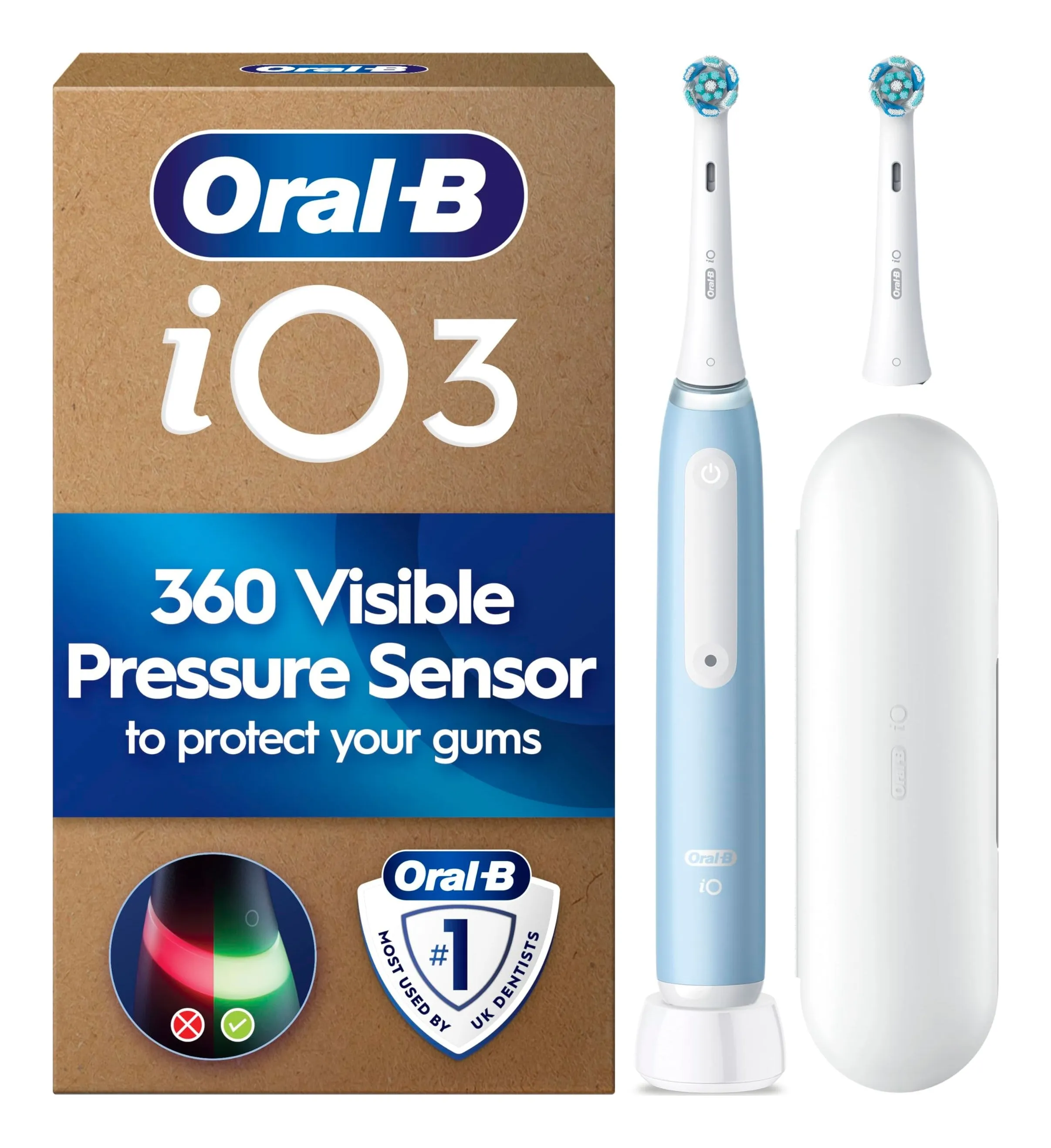
The visible two-way sensor shows a light for too hard, right and too gentle. Only Oral-B’s iO3 and above do this at a sensible price, and it is the feature we would pay for first, because most people who switch to an electric brush over-correct and brush too lightly.
a two-way visible pressure sensor: too hard, too soft, right
Oral-B iO3 (travel case + spare head)
- Modes
- 3 modes
- Pressure sensor
- 360° light: too hard, too soft or right
- Timer
- 2-minute light ring, head-change reminder
- Battery
- Up to 4 weeks (Oral-B); about 2 weeks in reviews†
- Charge time
- About 16 h on the standard charger†
- Brush heads
- iO round heads
Check price on Amazon
A ring behind the head lights red for too hard, white for too gentle, green for right. Three modes, a light-ring timer, a head-change reminder. Oral-B’s battery claim of up to four weeks runs ahead of what reviewers measure, about two.
The visible one-way sensor lights red for too hard: the Oral-B iO2, and the light ring on the Sonicare DiamondClean 9000.
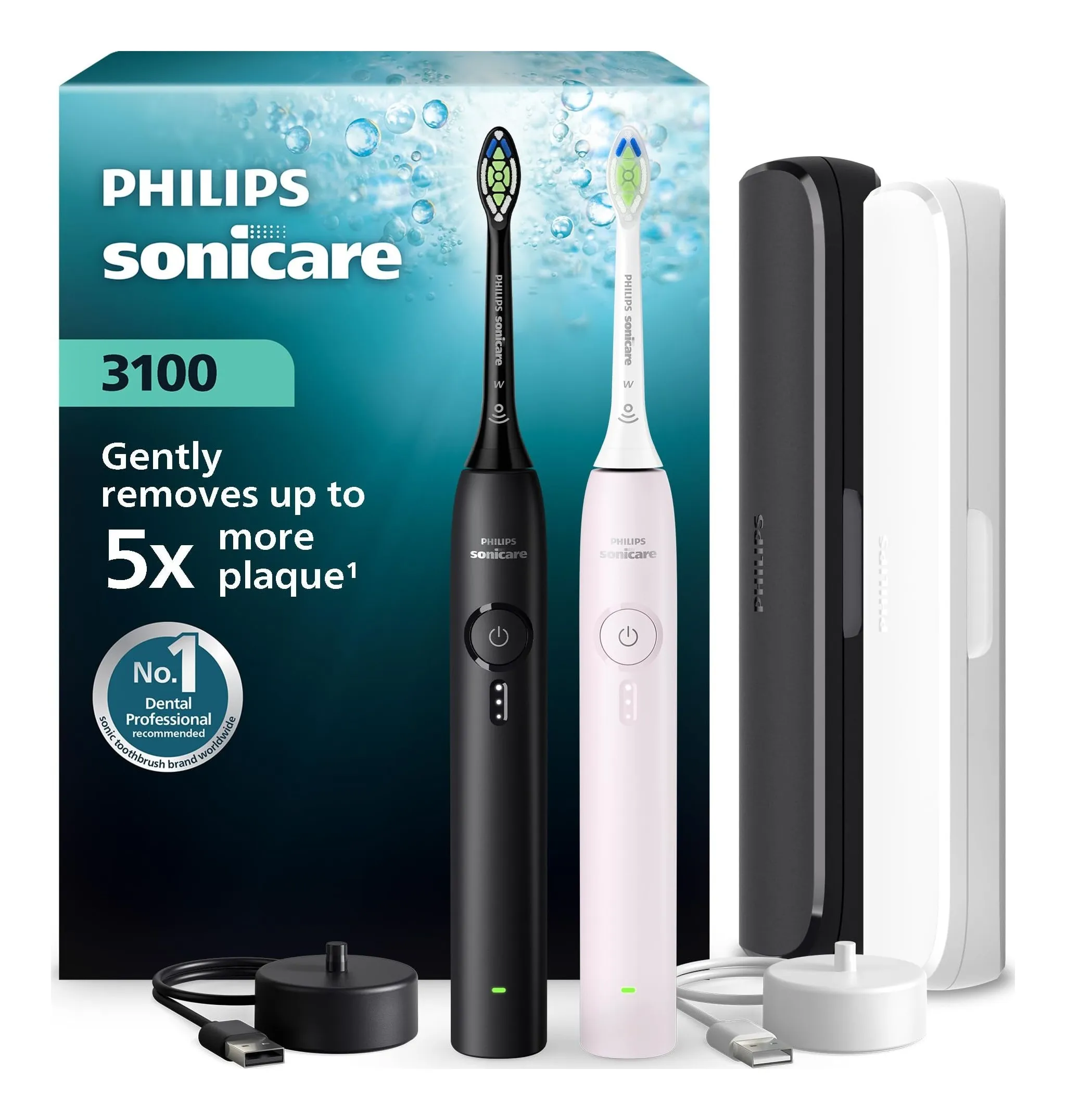
The haptic sensor changes the handle’s vibration when you press, so you feel it rather than see it. Sonicare’s 3100 and 5300 do this. It works once you have learned what the buzz means; it is easy to miss for the first week.
Strengths
- Pressure feedback in both directions
- Spare head and case included
- Three modes with a whitening setting
Limitations
- Slow to charge on the standard puck
- Battery life claim is optimistic against reviews
- No display of which mode is selected
Good for
- most adults replacing an older oscillating brush
- gum-health advice from a dentist
Look elsewhere if
- someone who wants app coaching
a haptic pressure sensor at the entry price
Philips Sonicare 3100 (HX4072/42)
- Intensities
- 3 intensities
- Pressure sensor
- Yes: handle vibrates
- Movements
- 31,000 per minute
- Timer
- SmarTimer 2 min, QuadPacer 30 s
- Battery
- 14 days
- Brush heads
- Sonicare click-on (W Optimal White supplied)
Check price on Amazon
Philips’ cheapest brush with a sensor: the handle vibrates differently under too much pressure. Three intensities, a 14-day battery, the two-minute timer with four 30-second quadrants.
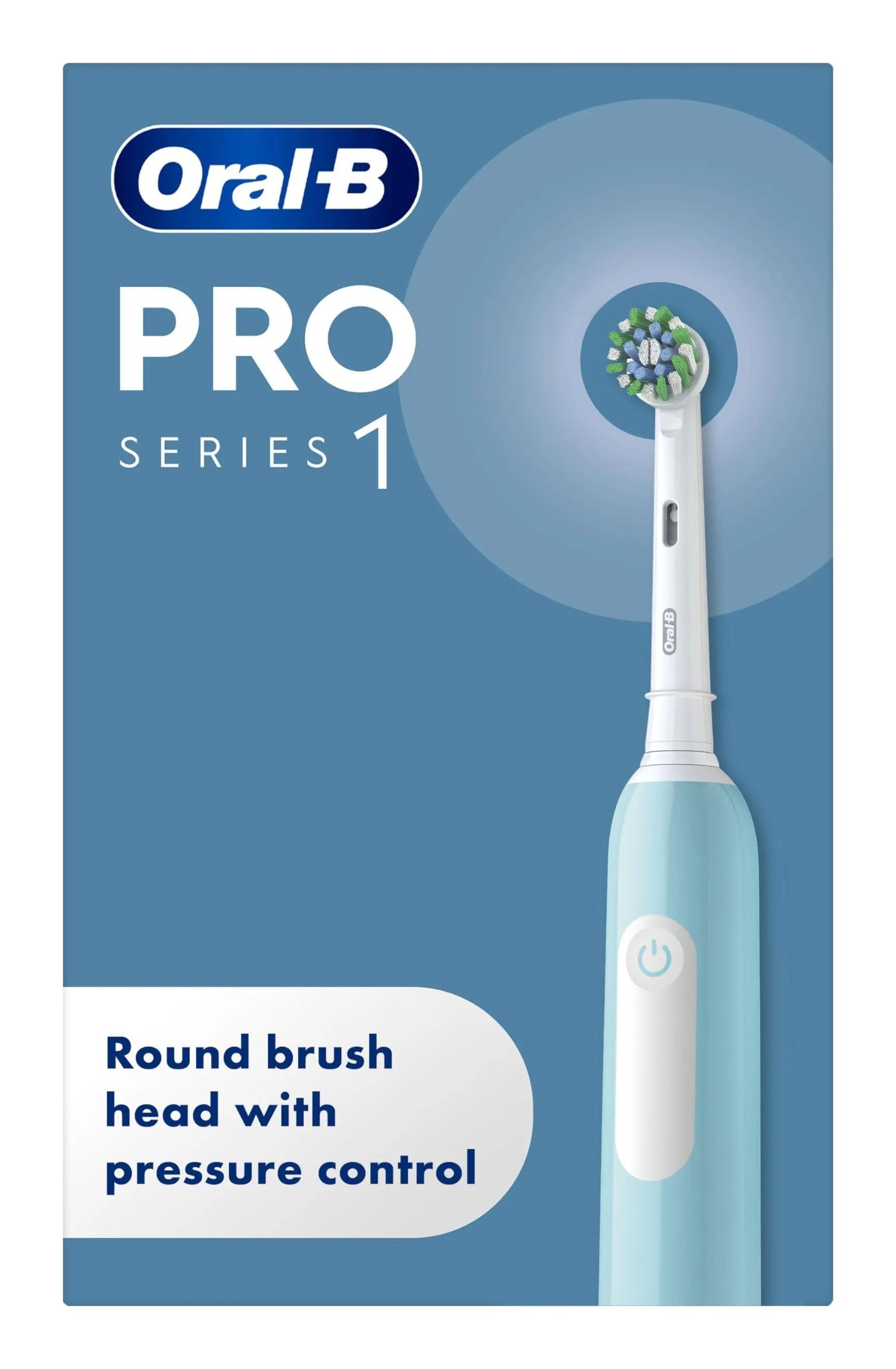
Below those, the Oral-B Pro 1 slows its pulsations when you press hard, with no signal at all, and the Sonicare 2100 has no sensor. They are for people who already brush gently.
Strengths
- Pressure sensor at a low price
- Three intensities
- Fourteen-day battery
Limitations
- Sensor is a vibration, not a light
- Supplied head is the whitening type, firmer than Philips' gum-care heads
Good for
- the sensible default for one adult
- someone told to ease off their gums
Look elsewhere if
- anyone who wants app tracking
The timer and the pacer
Every electric brush here runs for two minutes and signals the end. The useful part is the pacer: a pulse every 30 seconds (Oral-B, Sonicare SmarTimer with QuadPacer) or every 20 seconds (Sonicare 5300 BrushPacer) that moves you to the next section of the mouth. Without it, the front teeth get ninety seconds and the back molars get thirty. Every brush in our shortlist has one; the cheapest brushes in the supermarket often do not.
The head reminder
A head is worn when the bristles splay, which takes about three months for most people and six weeks for a scrubber. Oral-B’s blue indicator bristles fade; the iO3 and the Sonicare 5300 and 9000 count brushes and tell you. The 5300 also weights the count by how hard you pressed, which is the right way to do it.
the longest stated battery: 21 days
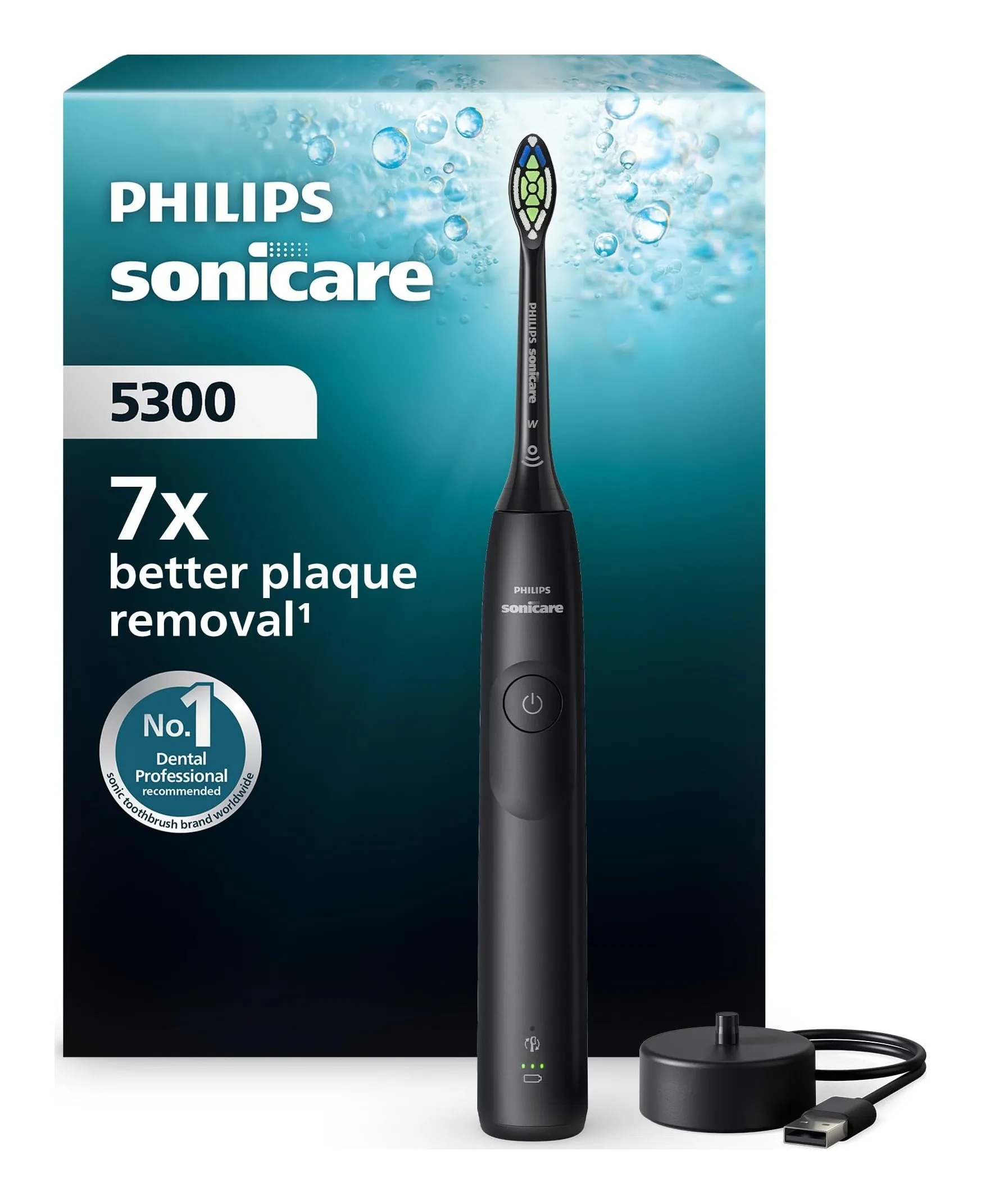
Philips Sonicare 5300 (HX7101/01)
- Intensities
- 2 intensities
- Pressure sensor
- Yes: handle vibrates
- Movements
- 62,000 per minute
- Timer
- SmartTimer 2 min, BrushPacer 20 s
- Battery
- 21 days
- Head reminder
- Yes, by use and pressure
Check price on Amazon
Twenty-one days per charge by Philips’ figure, a pressure alert, a 20-second pacer and a head reminder that tracks pressure as well as time. Two intensities and no modes, which is enough.
Strengths
- Longest battery here: 21 days by Philips' figure
- Twice the movements of the 3100
- Tells you when the head is worn
Limitations
- No modes, just two intensities
- Supplied head is the whitening type
Good for
- someone who travels and forgets the charger
- a brusher who wears heads out unevenly
Look elsewhere if
- anyone who wants the Bluetooth coaching
Battery: how to read the claim
Makers state battery life at two two-minute brushes a day on the default setting. Philips gives one figure per model and it is close to what people get: 14 days for the 2100, 3100 and DiamondClean 9000, 21 for the 5300. Oral-B’s pages give ranges that contradict each other (10 days or four weeks for the iO2) and nothing at all for the Pro 1. A reasonable rule: a stated 14 days means a fortnight; a stated four weeks means two or three.
Charging time matters if you forget until the brush dies. Oral-B’s standard chargers take up to 16 hours; Sonicare’s are similar. Both makers sell faster chargers as extras.
Heads: the real cost
The handle is bought once; the heads are bought four times a year for as long as you own it. Three families matter in the UK:
- Oral-B Pro heads fit the Pro 1 and every older Oral-B. Cheapest, widest range, in every supermarket.
- Sonicare click-on heads fit all current Sonicare handles, including the four in our shortlist, in multipacks.
- Oral-B iO heads fit only iO brushes. Dearest, and the choice is narrower.
the cheapest heads: Oral-B Pro, not iO
Oral-B Pro 1
- Modes
- 1 mode†
- Pressure sensor
- Stops pulsations when pressing too hard; no light
- Timer
- 2 minutes with 30-second zone prompts
- Motion
- Oscillating, rotating, pulsating
- Brush heads
- Pro heads (not iO)
- In the box
- Handle, 1 head, charger
Check price on Amazon
The budget Oral-B that takes Pro heads: a two-minute timer with 30-second zone prompts, a felt-not-seen pressure control, and Oral-B’s own table says one mode where the listing says three. No battery figure published.
Over five years the head choice is a bigger difference than the handle price.
Strengths
- Pro heads cost less than iO heads
- Timer and zone prompts like the dearer models
- Light and simple
Limitations
- Pressure control gives no visual warning
- Battery life not published
- Mode count disputed between Oral-B's table and the listing
Good for
- a budget brush with a dentist's two-minute timer
- a second brush for travel
Look elsewhere if
- anyone who presses hard and needs to see it
Oscillating or sonic
Oral-B’s round head oscillates and rotates a few thousand times a minute and pulsates; it feels like a small polisher and cleans one tooth at a time. Sonicare’s oval head vibrates at 31,000 or 62,000 movements a minute and feels like a buzz; it covers two or three teeth and relies on you moving it slowly. Dentists recommend both. People who switch from manual often prefer the Sonicare feel at first and the Oral-B feel after a month. If you can, borrow one of each for a night.
Modes and intensities
A mode changes the pattern of the motor; an intensity changes its strength. Daily clean at medium is what you will use. Sensitive is worth having for the first fortnight and for anyone with recession. Whitening modes polish harder with the same paste and are a marketing name; gum-care modes are a gentler clean. Apps that score your brushing work for people who like scores; most are deleted within a month.
How to read a listing in five lines
- Pressure sensor: two-way light, one-way light, vibration, felt only, or none.
- Timer and pacer: two minutes with 30- or 20-second prompts.
- Battery: days, as stated by the maker, and whether the maker states one figure or several.
- Heads: Pro, Sonicare click-on, or iO.
- Head reminder: yes or no.
If a listing leads with a plaque percentage and a mode count and says nothing about the sensor, it is hiding the sensor’s absence.
Which kind, by person
- Told to look after your gums: a two-way visible sensor: Oral-B iO3.
- Prefers the sonic feel, modest budget: Sonicare 3100.
- Travels, forgets chargers: Sonicare 5300.
- Lowest running cost: Oral-B Pro 1 and a drawer of Pro heads.
- Already brushes gently, wants cheap: Sonicare 2100.
Sources
Facts checked 23 October 2026
- Oral-B UK — iO3 product page — Manufacturer documentation, checked 23 October 2026
- Amazon listing (Oral-B) — Retailer listing, checked 23 October 2026
- Philips UK — Sonicare 3100 HX4072/42 product page and specifications — Manufacturer documentation, checked 23 October 2026
- Amazon listing (PHILIPS) — Retailer listing, checked 23 October 2026
- Philips UK — Sonicare 5300 HX7101/01 product page and specifications — Manufacturer documentation, checked 23 October 2026
- Amazon listing (PHILIPS) — Retailer listing, checked 23 October 2026
- Oral-B UK — Pro Series 1 product page — Manufacturer documentation, checked 23 October 2026
- Amazon listing (Oral-B) — Retailer listing, checked 23 October 2026
Is an electric toothbrush really better than manual?
For most people, yes, because it removes the two habits that make manual brushing poor: scrubbing hard and stopping at ninety seconds. The brush does the motion; you move it slowly from tooth to tooth. A pressure sensor and a two-minute timer are the features that enforce this, which is why we rank them above modes.
How many modes do I need?
One you use. Daily clean at a medium intensity is what dentists recommend; a sensitive setting helps for the first weeks or with gum recession. Whitening modes change the pattern, not the chemistry, and gum-care modes are a slower daily clean. The Sonicare 5300 has two intensities and no modes and loses nothing.
Why do battery claims vary so much?
Makers measure at two two-minute brushes a day on the default mode and round generously. Philips states one figure per model (14 or 21 days here). Oral-B's pages give the iO2 both 10 days and four weeks. Reviewers who count get roughly two weeks from an iO3. Treat anything over three weeks as optimistic.
Which heads are cheapest?
Oral-B Pro heads, which fit the Pro 1 and older Oral-B models, and are sold everywhere. Sonicare click-on heads fit all four Sonicare brushes here and come in supermarket multipacks. Oral-B iO heads fit only iO brushes and cost the most. All makers say replace every three months.
Related reading
Shortlist · Bathroom
Best electric toothbrushes: six Oral-B and Sonicare models compared on sensors, modes and battery
An electric toothbrush is bought on a price tier and sold on a plaque percentage. What changes your brushing is plainer: a warning when you press too hard, how many days the battery lasts, a two-minute timer, and what the heads cost. Six brushes from the two makers that publish those figures, Oral-B and Philips Sonicare, from the cheapest round-head Oral-B to the DiamondClean with an app.
Shortlist · Bathroom
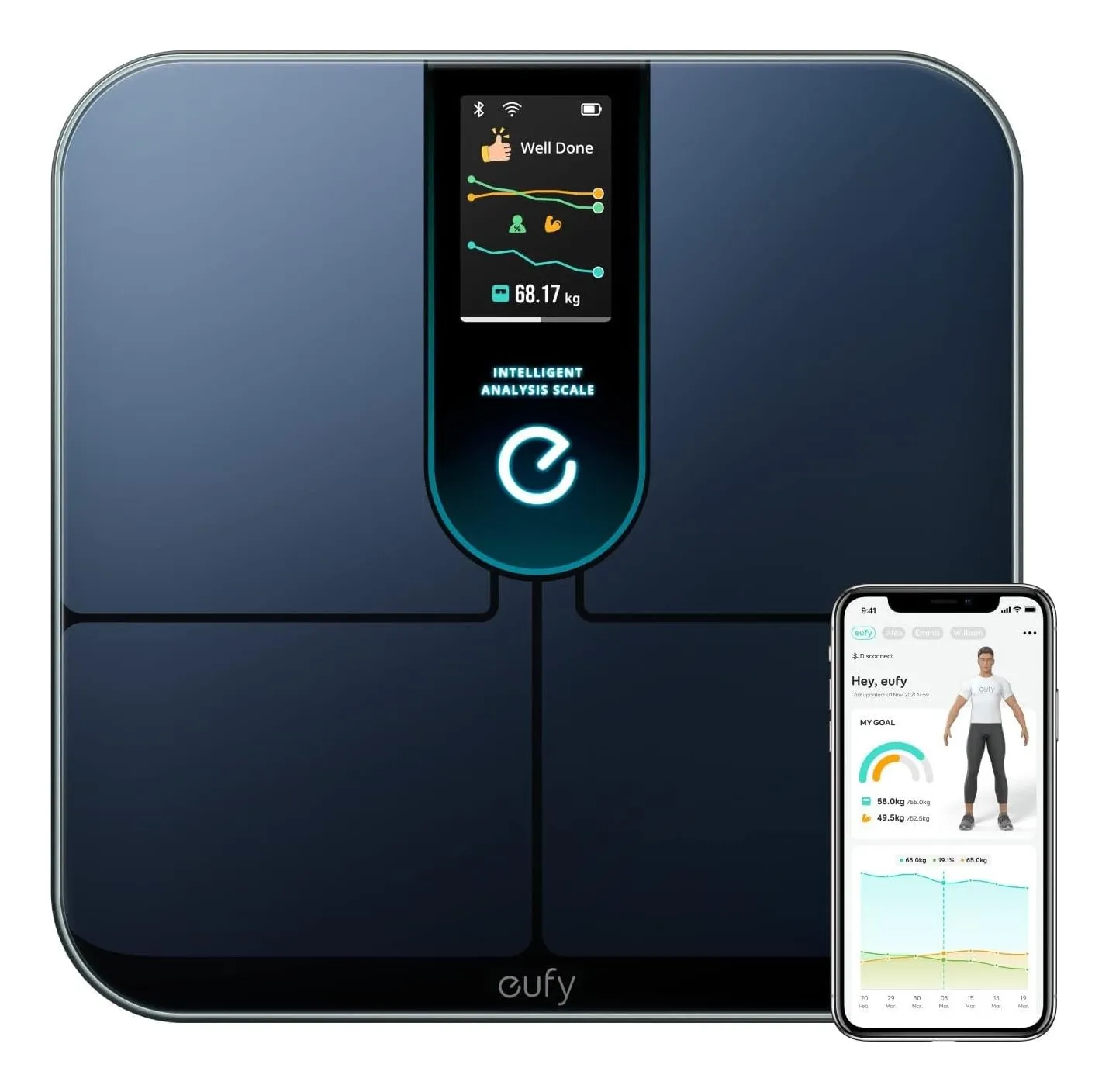
Best bathroom scales: six body-composition scales from a no-app Salter to the eight-electrode Withings
Every scale here does the same trick: a small current through your feet estimates fat, muscle and water from how your body resists it. What differs is the maximum weight, the step size, whether it syncs by Bluetooth, Wi-Fi or not at all, how many people it remembers, and whether it measures your top half or guesses it. Six scales from Salter, Renpho, eufy and Withings.